Unearthing History: Nana Anna Amba Samoaah’s Gravestone in Cape Coast’s 1824 War Cemetery – A Fante Queen Mother Who Witnessed the Anglo‑Ashanti Wars
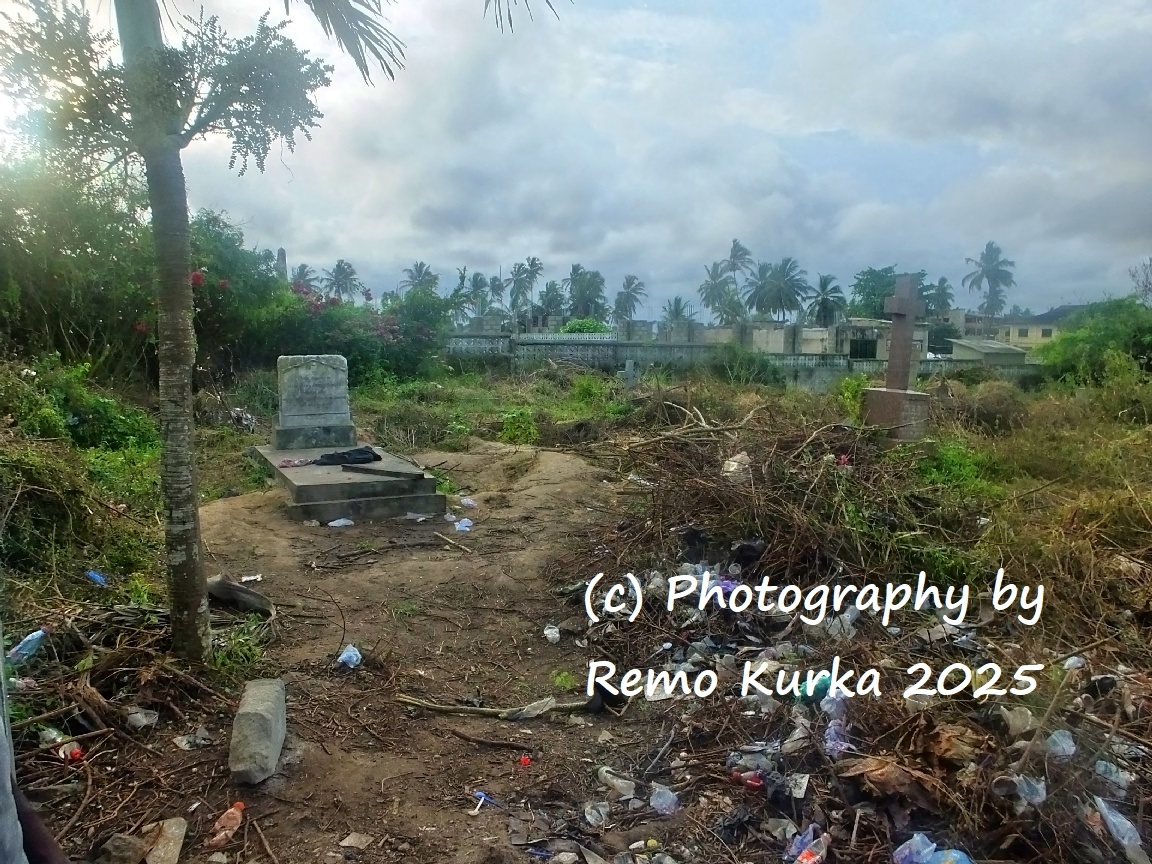
Unearthing History: Nana Anna Amba Samoaah’s Gravestone in Cape Coast’s 1824 War Cemetery – A Fante Queen Mother Who Witnessed the Anglo‑Ashanti Wars
Story, photos, and research by Remo Kurka (c) 2025 - Permission in writing is required to use any part of this text or research! - Each inscription in Cape Coast’s 1824 War Cemetery carries echoes of lives lived through conflict, faith, and resilience. Among the weathered stones, one memorial stands out: the grave of Nana Anna Amba Samoaah, an elderly Fante woman whose epitaph blends personal devotion with cultural significance. Her stone, nestled amid palms and bougainvillea, restores the memory of a matriarch who lived through a century of upheaval on the Gold Coast.
This discovery is remarkable not only for its rarity — African women seldom received marble headstones in colonial cemeteries — but also for the story it tells: of love, longevity, and survival in a turbulent era.
1834 War CemeterySearch our Network. Start here.
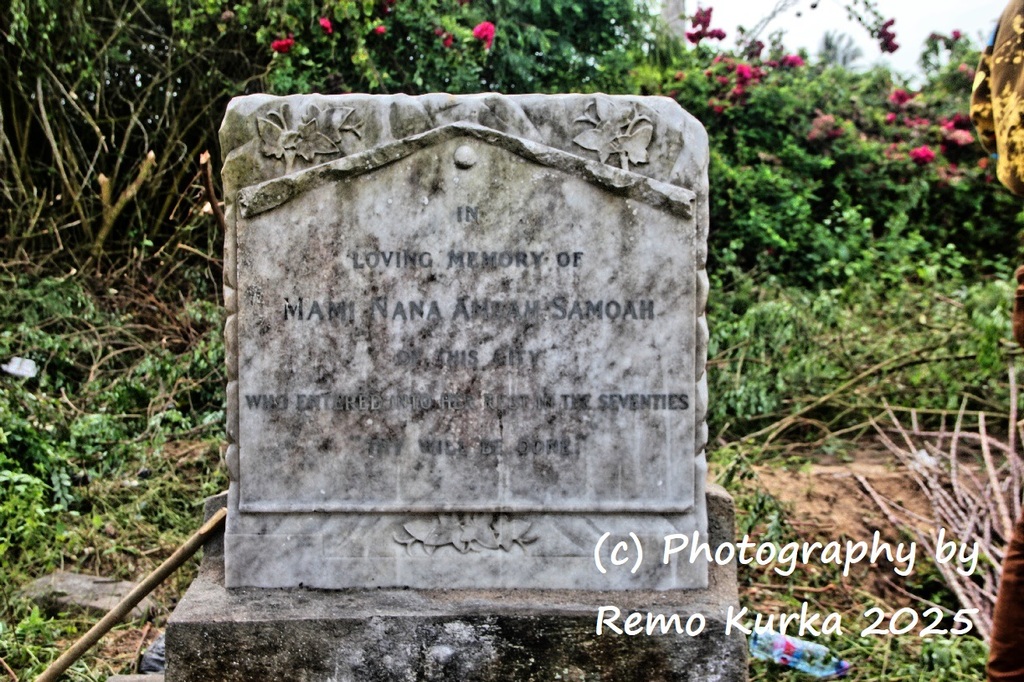
Bringing here back into memory! IN LOVING MEMORY OF NANA ANNA AMBA SAMOAAH
Transcription of the Gravestone
The memorial bears the following inscription, carefully preserved with its original phrasing and abbreviations:
IN
LOVING MEMORY OF
NANA ANNA AMBA SAMOAAH
WHO DIED IN THIS CITY
IN HER SEVENTIES
MY WIFE WILL BE FOREVER
Interpretation of the Inscription
The phrase “IN HER SEVENTIES” indicates her age at death, a detail uncommon in African graves of the period. The closing line, “MY WIFE WILL BE FOREVER,” reflects her husband’s enduring grief, echoing Victorian funerary styles but localized in Ghanaian stonework. The absence of a precise date shifts focus to her longevity — a life spanning nearly nine decades of Cape Coast’s transformation.
Who Was Nana Anna Amba Samoaah?
Born around 1795–1805, Nana Anna was a respected elder of the Fante people. The honorific “Nana” suggests she held status as a queen mother or matriarch, roles central to Akan society. Women in these positions advised chiefs, safeguarded matrilineal inheritance, and mediated disputes. Her name, “Samoaah,” may connect her to merchant families in Cape Coast and Anomabo, who were deeply involved in trade networks linking Africa and Europe.
Her epitaph’s intimate tone reveals a devoted marriage, unusual in colonial memorials where military service often overshadowed personal life. She was remembered not only as a public figure but as a beloved partner.
Historical Context
Nana Anna’s lifetime spanned the Anglo‑Ashanti wars and the colonial transformation of Cape Coast:
1824 Battle of Nsamankow: As a young woman, she witnessed the catastrophic defeat of Governor Charles MacCarthy by Ashanti forces.
Later Wars (1863, 1873–74): She lived through renewed conflict, including the burning of Kumasi.
Colonial Shifts: Cape Coast evolved from a slave‑trading hub to the British colonial capital, with missionary schools and new trade systems reshaping society.
Her death in her seventies (likely between 1865–1885) places her among the generation that carried living memory of the 1824 disaster into the late 19th century.
The 1824 War Cemetery
The cemetery, established after the First Anglo‑Ashanti War, became a resting place not only for British officers but also for African allies and civilians. Nana Anna’s grave, with its floral motifs and Victorian script, stands as a rare African presence in a site often associated with colonial military losses. It reframes the cemetery as a shared space of remembrance.
Broader Context
Her life intersected with global currents: the abolition of the slave trade, the rise of British colonial rule, and the economic shifts of the 19th century. As a Fante matriarch, she embodied resilience, guiding her community through wars and upheavals while maintaining cultural traditions.
Legacy & Significance
Nana Anna Amba Samoaah’s gravestone is more than a memorial; it is a reclamation of African women’s voices in history. By recording her name and story digitally, we restore her presence in collective memory. She represents the unsung figures who sustained families and communities through colonial violence, and her epitaph bridges personal love with public history.
Today, her stone stands as a testament to resilience, remembrance, and the enduring spirit of Cape Coast.