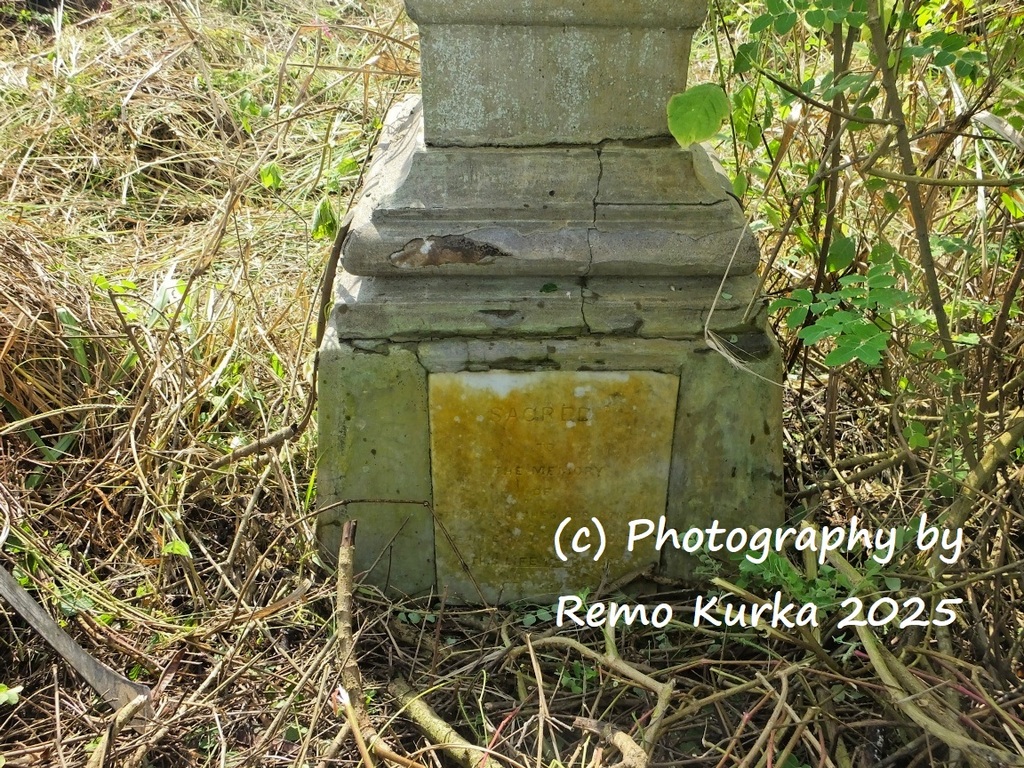
Yet despite its importance, the cemetery has suffered from decades of neglect. UNESCO and the Ghana Museums and Monuments Board (GMMB) have failed to properly document or preserve it. Unlike Cape Coast Castle, which enjoys World Heritage status, the cemetery has been treated as peripheral, left to weeds and silence. No verified register exists online or in archives. Many stones are broken, half‑buried, or illegible. The voices of soldiers, sisters, and children have been allowed to fade.
What is known today comes not from official institutions but from new fieldwork and original research conducted in 2025. Each headstone, cross, and fragment of inscription has been or will be carefully photographed, transcribed, and studied. This painstaking work is restoring names and stories that would otherwise be lost to time. It is revealing the cemetery as more than a military plot: it is a burial ground of extraordinary diversity, where African and European lives were bound together in death, until resurrection day by God Almighty.
The documentation and online presence of this cemetery is a reminder that heritage is not only castles and forts, but also the fragile stones of those who lived and died in their shadow. By documenting them now, we resist the silence left by UNESCO and GMMB, and we give back dignity to the forgotten dead.