Unearthing History: Catholic Rev. Sister Patience Gravestone in Cape Coast’s 1824 War Cemetery – A Pioneer of Ghanaian Catholic Sisterhood
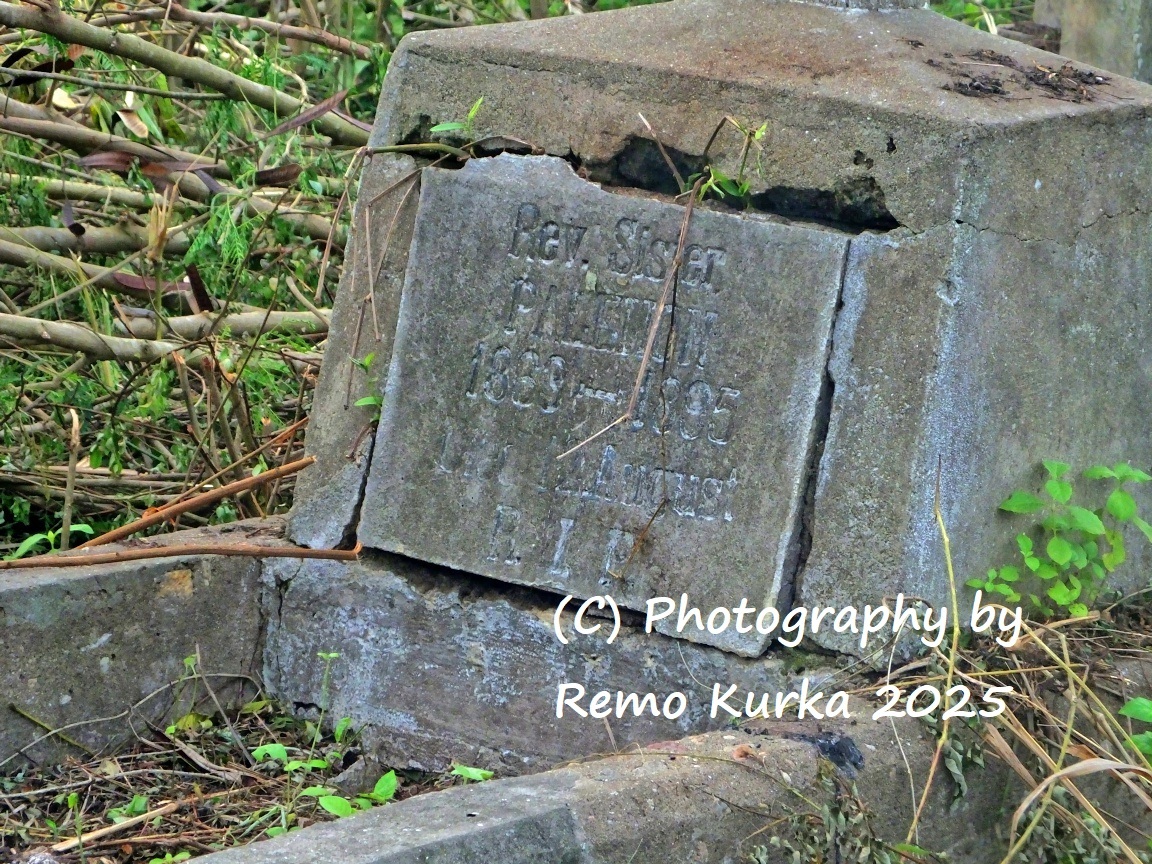
Unearthing History: Rev. Sister Patience’s Gravestone in Cape Coast’s 1824 War Cemetery – A Pioneer of Ghanaian Catholic Sisterhood
Story, photos, and research by Remo Kurka (c) 2025 - Permission in writing is required to use any part of this text or research or photo!
Among the weathered stones of Cape Coast’s 1824 War Cemetery lies a broken concrete block, half‑buried in weeds. Its inscription is simple: “Rev. Sister Patience, 1839 – 14 August 1885, R.I.P.” Yet behind those words is the extraordinary story of one of the first African women to take permanent religious vows in Ghana.
Her grave is not just a memorial; it is a testament to courage, faith, and the quiet Africanisation of Christianity in the 19th century.
1834 War CemeterySearch our Network. Start here.
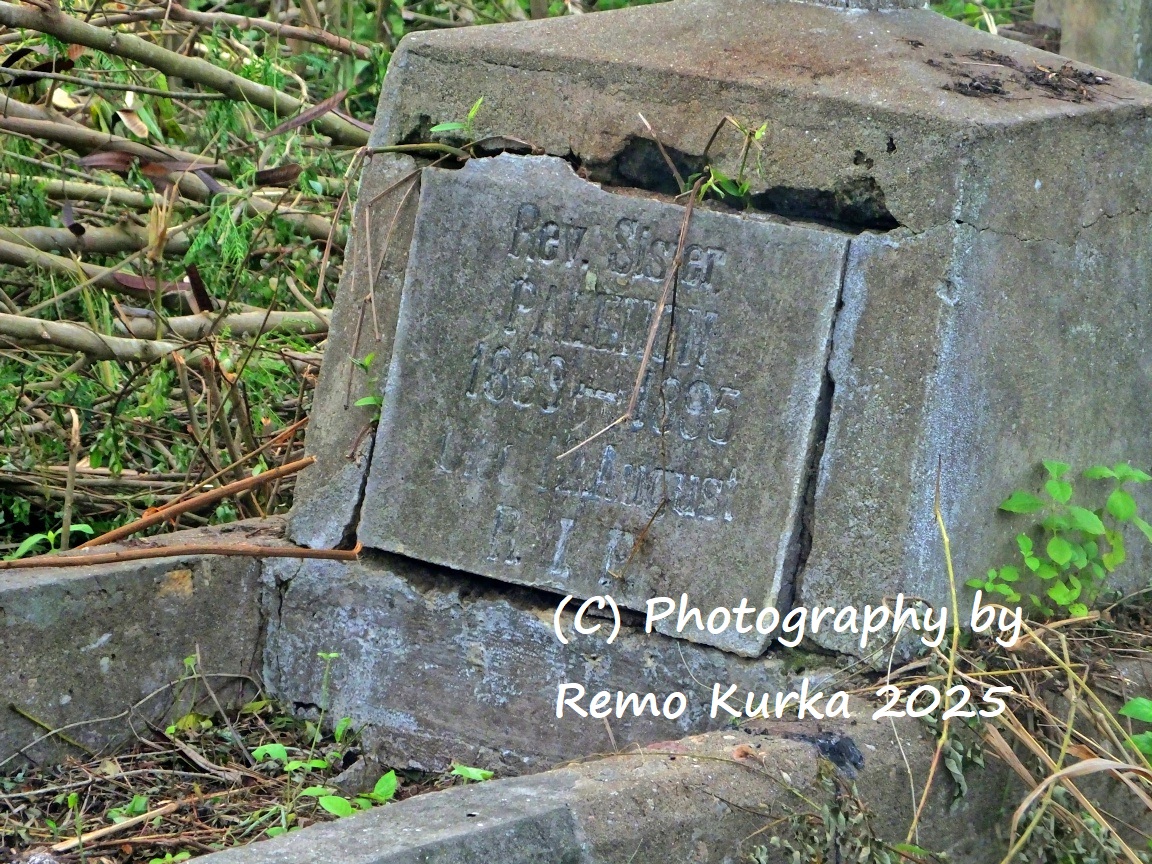
Rev. Sister PATIENCE
1839 – 14 August 1885 R.I.P.
This broken concrete block marks the grave of one of the most remarkable and least-known women buried in the entire cemetery.
Transcription of the Gravestone
The memorial bears the following inscription, with its original phrasing and abbreviations:
Rev. Sister PATIENCE
1839 – 14 August 1885
R.I.P.
This broken concrete block marks the grave of one of the most remarkable and least-known women buried in the entire cemetery: an African nun who belonged to the very first community of indigenous Ghanaian Catholic sisters.
Who She Was
Her full religious name was Sister Mary Patience. Her baptismal or family name was likely Patience Essuman or Essuaba — both common Fante day‑names for women born on Saturday. She was born around 1839, probably in one of the old Catholic towns near Cape Coast, such as Elmina or Saltpond, where Catholicism had first taken root in the 17th century.
By the early 1880s, she had joined the Sisters of the Holy Family, a French congregation that arrived in Ghana under Bishop Pierre Bonhomme. She was part of the very first cohort of African women to profess vows as Catholic sisters — a revolutionary step in a society where religious life had long been seen as exclusively European.
Historical Background
1880: The Catholic mission station at Elmina was reopened by the French Society of African Missions (SMA).
1881–1883: A novitiate was established for local African women, allowing them to train as sisters.
By 1885: Several Fante and Elmina women had professed vows, adopting French religious names but keeping African day‑names as their Christian identities. Thus emerged sisters named Patience, Mercy, Charity, and others.
These pioneering women taught in mission schools, nursed the sick, and cared for orphans. They wore full European‑style habits in the sweltering coastal heat, embodying both devotion and endurance.
Her Death at 46
Sister Patience died on 14 August 1885, aged about 46. The SMA diaries from Elmina record that several sisters died young in those years, victims of malaria, yellow fever, and sheer exhaustion from their work.
She was buried with full honours in the old military cemetery at Bakaano, because Catholics did not yet have their own consecrated burial ground in Cape Coast. Her presence there — among British officers, German merchants, and African converts — reflects the shared vulnerability of all who lived and died in the “fever coast.”
The Broken Stone
Her grave marker is a locally cast concrete block, not imported marble or granite. This reflects the poverty of the Catholic mission in the early 1880s. The lettering, though simple, proudly declares her title: “Rev. Sister.”
That title matters. It was a public recognition that an African woman had achieved the same religious dignity as European nuns. Today, the stone is cracked and half‑buried, but its message endures: faith and devotion transcended race, class, and colonial hierarchies.
Why This Grave Matters
Rev. Sister Patience belongs to a tiny, almost‑forgotten group: the first five or six African Catholic sisters in Ghana. Her story challenges the old narrative that Catholicism was purely European until the 20th century.
Here was a local woman, born a generation after the 1824 war, who gave her life to the Church and was buried with honour. She represents the quiet Africanisation of Christianity already underway in the 1880s — decades before independence, decades before most people realise.
Her cracked stone is a symbol of resilience: fragile in form, unbreakable in spirit.
Legacy
Rev. Sister Patience’s grave is holy ground. It tells us that African women were not passive recipients of European religion, but active pioneers who shaped the Catholic Church in Ghana. Her life and death remind us that the cemetery is not only a resting place for soldiers and merchants, but also for African sisters whose devotion helped transform faith on the Gold Coast.
Rest in peace, Rev. Sister Patience — true daughter of the Gold Coast.
Sources
Society of African Missions (SMA) diaries, Elmina, 1880s
Catholic mission histories in Ghana (Elmina and Saltpond)
Records of the Sisters of the Holy Family, French congregation archives
William Fox, A Brief History of the Wesleyan Missions on the West Coast of Africa (for comparative missionary context)
Local oral traditions of early Catholic sisters in Elmina