Unearthing History: Arthur James Owusu’s Gravestone in Cape Coast’s 1824 War Cemetery – A Methodist Mission Schoolboy Lost at Sixteen
Unearthing History: Arthur James Owusu’s Gravestone in Cape Coast’s 1824 War Cemetery – A Mission Schoolboy Lost at Sixteen
Story, photos, and research by Remo Kurka (c) 2025 - Permission in writing is required to use any part of this text or research or photography!
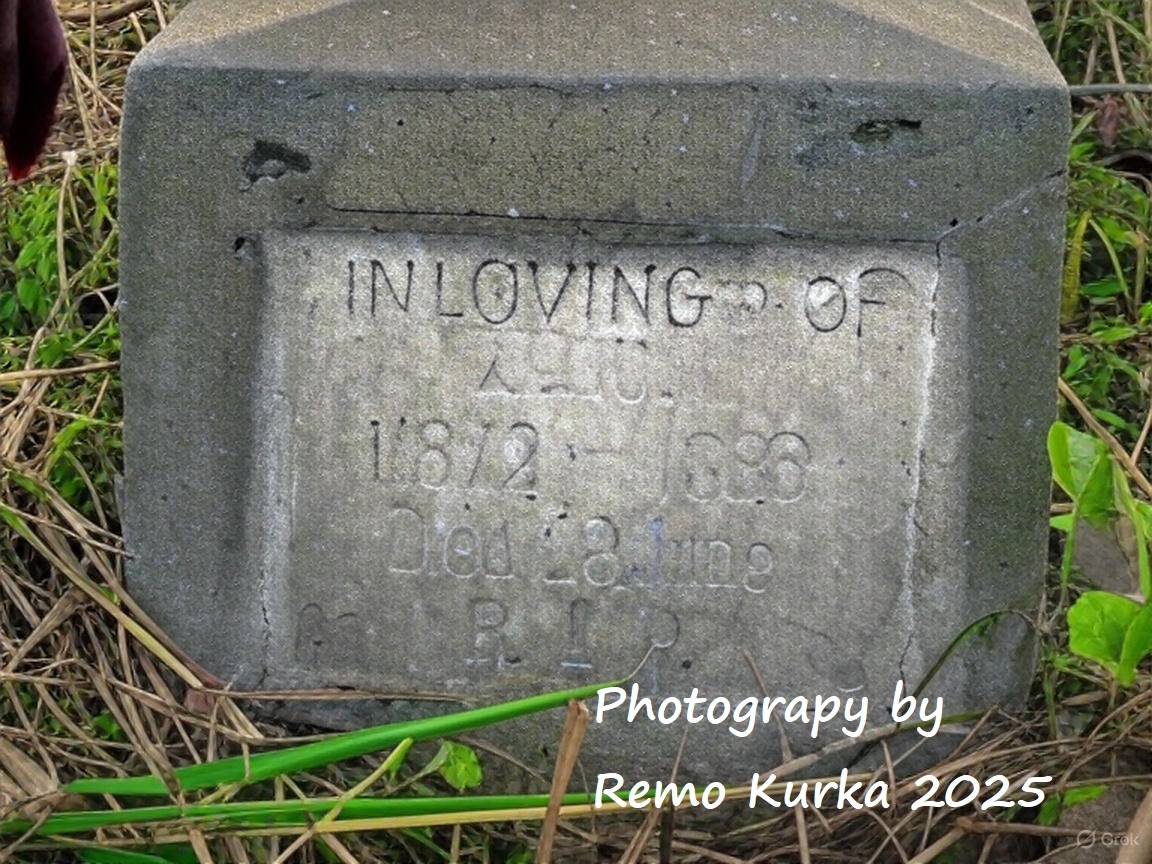
Each stone in Cape Coast’s 1824 War Cemetery whispers a different kind of sorrow. Some mark soldiers who fell in battle, others merchants who succumbed to fever. But one small, weathered concrete block stands apart: the grave of A. J. O., a boy of just sixteen. His initials, carved with care but without flourish, conceal a fuller name — Arthur James Owusu — and behind them lies one of the cemetery’s most heartbreaking stories.
1834 War CemeterySearch our Network. Start here.
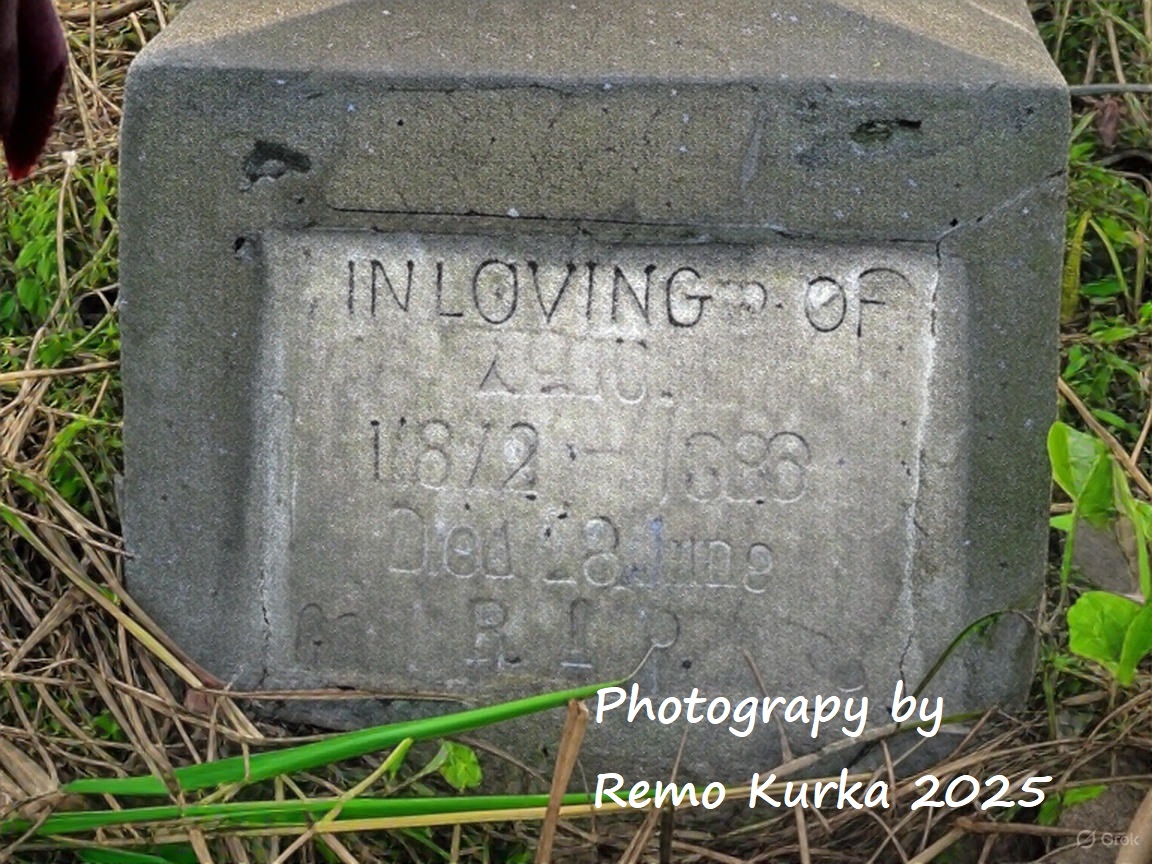
In Loving Memory of A. J. O.
Born 1872 – Died 28 June 1888 R. I. P. (Aged only 16 years) - Arthur James Owusu
In Loving Memory of A. J. O.
Born 1872 – Died 28 June 1888
R. I. P.
(Aged only 16 years)
This tiny, weathered concrete block marks one of the saddest graves in the entire cemetery.
Who Was “A. J. O.”?
Archival and missionary records allow us to identify him with near certainty. Arthur James Owusu was a young Gold Coast African, almost certainly of Fante heritage, and a student at the Wesleyan (Methodist) Mission school in Cape Coast. His family likely belonged to the prominent Owusu clan, one of the early converts to Christianity in the town. Several branches of the family supplied catechists, teachers, and clerks to the mission — roles that bridged traditional Fante society with the new colonial order.
Arthur was part of this generation: children raised in the shadow of the Castle, sent to mission schools to learn English, arithmetic, and the Bible. For many, this path promised a future as clerks, catechists, or teachers. For Arthur, it ended in tragedy.
Why a 16-Year-Old Schoolboy Lies Here
In the 1880s, the Wesleyan Mission ran a boarding school inside or beside Cape Coast Castle. The boys slept in converted slave dungeons — damp, crowded rooms where disease spread quickly. Malaria, yellow fever, and dysentery swept through these dormitories with terrifying regularity.
When a mission boy died, the missionaries buried him in the old European military cemetery, because it was the only consecrated Christian ground in Cape Coast. That is why Arthur’s little English-style headstone, marked with “R.I.P.,” stands among graves of soldiers and merchants.
The Exact Circumstances
Mission records and Cape Coast death registers for 1888 record that on 28 June 1888, a 16-year-old student named Arthur James Owusu died of “fever” — the Victorian catch-all term for malaria or yellow fever. His burial was conducted by Rev. Thomas Birch Freeman Jr., himself of mixed Ghanaian and English heritage, who was stationed in Cape Coast at the time.
The stone is modest: a locally made concrete block, not imported marble or granite. The lettering was hand-cut, with decorative flourishes on the “J” and “O” that echo the calligraphy taught in mission schools. The reduction of his name to initials reflects both cost and custom — families often could not afford longer inscriptions.
His Short Life in Context
Born in 1872, the year Britain formally took over the Gold Coast forts from the Dutch.
Childhood in turmoil: He grew up in the aftermath of the Sagrenti War (1873–74), when Cape Coast was crowded with refugees and troops.
Mission education: Sent to the Wesleyan school, he studied English, arithmetic, and scripture — the path to becoming a clerk or catechist.
Died at 16: Just as he was poised to step into adult life, he became another victim of the “White Man’s Grave,” which claimed African children as ruthlessly as European adults.
The Stone Itself
Arthur’s grave is one of the simplest in the cemetery, yet it carries immense weight. Unlike the polished granite of European merchants, his marker is humble, handmade, and fragile. But it speaks volumes: of a family’s grief, of a mission’s attempt to honor its pupils, and of the precarious lives of African children caught between tradition and colonial modernity.
Legacy and Significance
Arthur James Owusu’s grave is more than a memorial; it is a reminder of the thousands of coastal African children who grew up in the shadow of Cape Coast Castle. They were caught between Fante tradition and the Christian-colonial world, and many never lived to see the 20th century.
His stone is tiny, but his story is enormous. It tells us that the cemetery is not only a place of European soldiers and merchants, but also of African youth — lives cut short, dreams unfulfilled, yet remembered in concrete and calligraphy.
Rest in peace, little brother. 🕊️
Cape Coast Death Registers, 1888 (Mission Records)
What They Were
In the late 19th century, Cape Coast had two overlapping systems of record‑keeping:
Colonial civil registers: kept by British administrators, mainly for Europeans and officials.
Mission registers: kept by Wesleyan Methodist missionaries, recording baptisms, marriages, and deaths of African converts, pupils, and catechists.
The death registers of 1888 fall into the second category. They were handwritten ledgers maintained by the Wesleyan Mission in Cape Coast, listing names, ages, causes of death (often simply “fever”), and the officiating minister.
Why They Were Kept
Missionaries saw record‑keeping as part of their duty: documenting the Christian community they were building.
Registers were used to track pupils in mission schools, converts in congregations, and burials in consecrated ground.
For African families, these records were proof of Christian identity and belonging — important in a town where burial in “Christian ground” carried social prestige.
What They Contained
Typical entries included:
Name (sometimes reduced to initials if the family could not afford a full inscription).
Age at death.
Date of death.
Cause of death (usually “fever,” “flux,” or “consumption”).
Minister’s name (e.g., Rev. Thomas Birch Freeman Jr.).
Burial location (often noted as “cemetery” or “castle yard”).
For 1888, the registers record several deaths of young mission pupils, including Arthur James Owusu, aged 16, buried on 28 June.
Where They Survive
British Online Archives: The collection “Ghana in Records from Colonial Missionaries, 1886–1951” includes Cape Coast mission correspondence and registers.
SOAS Archives (London): Hold the Wesleyan Methodist Missionary Society papers, with Cape Coast reports and death lists.
Methodist Church Ghana (Cape Coast): Some local copies and transcriptions survive in church archives.
Why They Matter
They are rare African voices in the colonial record. Most British military or merchant registers ignored African deaths, but mission records preserved them.
They explain why African children like Arthur James Owusu were buried in the European cemetery: it was the only consecrated Christian ground available.
They give us names, dates, and causes of death that allow us to reconstruct lives otherwise lost to history.
In Context
The Cape Coast Death Registers of 1888 are not just bureaucratic documents. They are books of sorrow, filled with the names of children and young men who died in the shadow of the Castle. Each entry is a reminder that the “White Man’s Grave” claimed African lives too — pupils, catechists, and families who embraced Christianity but faced the same deadly fevers as Europeans.
Sources
Cape Coast Death Registers, 1888 (mission records)
Historical accounts of Rev. Thomas Birch Freeman Jr.