The Regiment’s Stone – A Marker of Service, Not of Self
The Regiment’s Stone – A Marker of Service, Not of Self
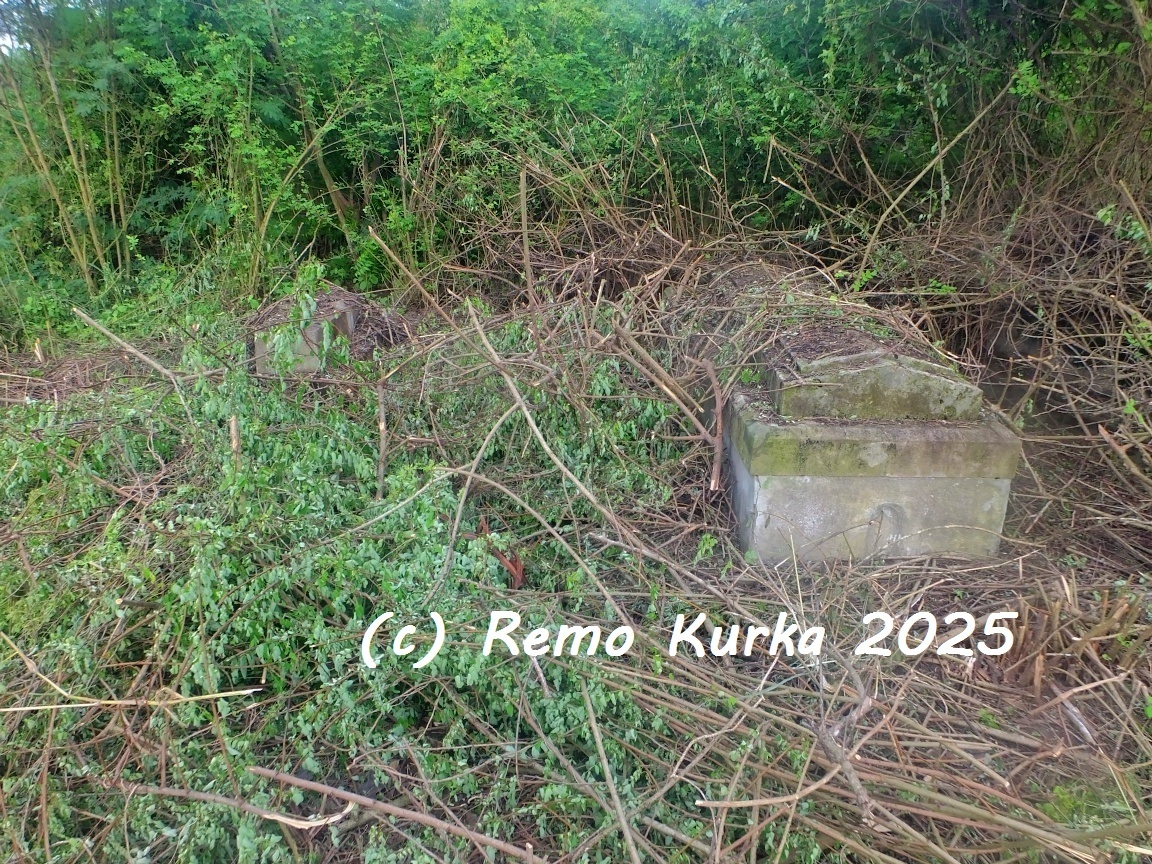
The story deepens with this block — a stubborn relic, half-consumed by lianas, moss, and the relentless haze that softens every surface in the Cape Coast air. Its weathered face resists easy reading; the serifs blur like a dispatch fading before one’s eyes. Yet, unlike the personal memorials of Williams, Huntingford, or Sister Mary Josephine, this stone carries no individual name and no psalm of farewell.
Instead, it is a collective monument, carved by the men of the 2nd West India Regiment themselves — a soldier’s tribute to service rather than self. The bold, surviving dates anchor its purpose, while the faint arched line above mirrors the design found on the nurse’s pedestal nearby, suggesting both were cut in the same brief, fevered months of 1874.
Cross-referencing the regimental ledgers and Gold Coast garrison records confirms its origin: not a grave, but a duty marker — a raw, utilitarian stone shaped at campaign’s end, left to stand where memory and obligation met. It speaks to the unrecorded labour of the ranks, to those who carved in granite what could not be written in dispatches: endurance, loss, and quiet survival in a land that remembered through stone when ink and breath had failed.
1834 War CemeterySearch our Network. Start here.
Transcription of the Memorial Stone
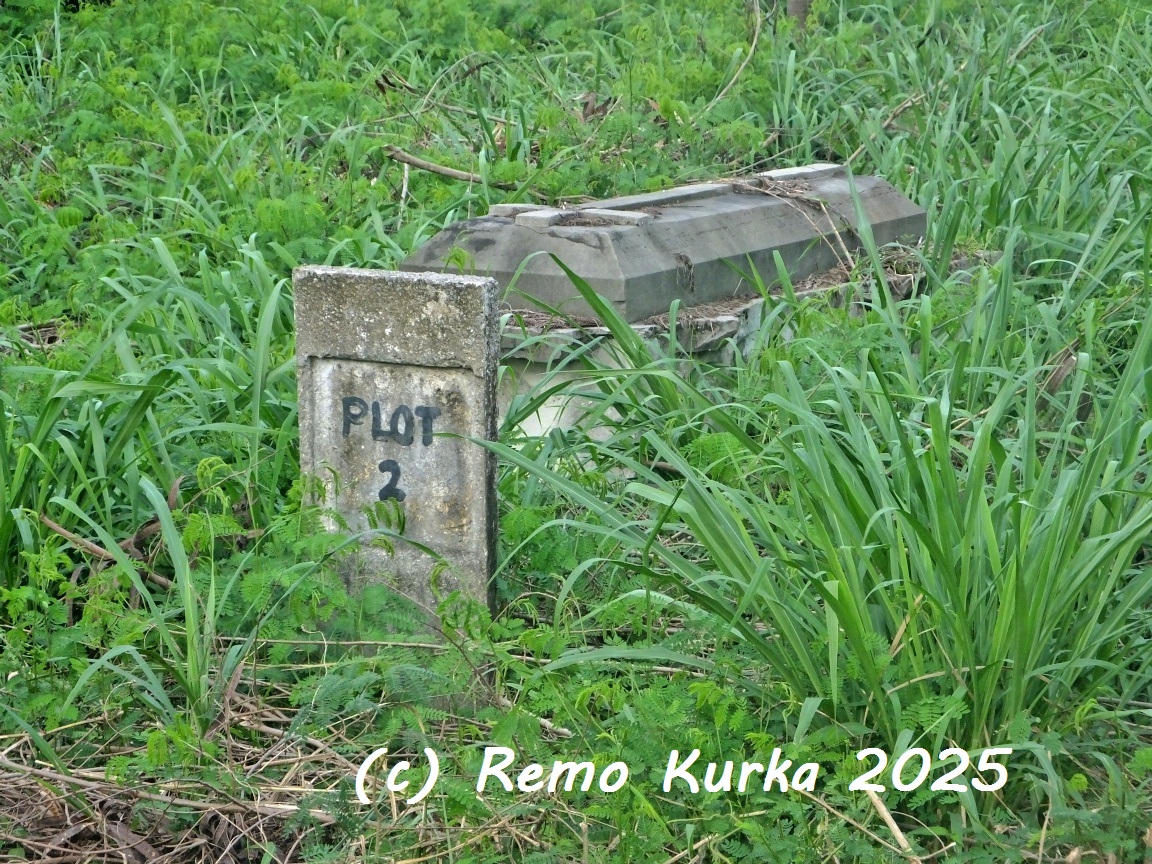
Plain and unembellished, this block bears only the essentials — no scripture, no flourish, just the regiment’s own record of service, carved with soldierly precision on its front face. The sides are blank; the top, long weathered smooth by tropical rain and time.
ERECTED BY THE OFFICERS AND MEN
OF THE 2ND WEST INDIA REGIMENT
1891 – 1892
The simple dash between the dates serves as a quiet bridge — a modest punctuation that bookends their Gold Coast posting with matter-of-fact finality. Unlike earlier stones of the 1870s, there is no biblical epitaph, no personal lament. This is martial brevity at its purest: a collective statement of duty fulfilled.
The word “MEN” trails slightly into the encroaching undergrowth, as if resisting erasure. It’s possible that a subtitle — perhaps “In Remembrance of Service” — once followed, now hidden beneath vines and soil. A careful rubbings scan on the next field visit may yet reveal what time has concealed.
What This Memorial Marks
This isn't for one fevered lieutenant or steadfast sister—it's the 2nd WIR's collective nod to their 18-month garrison at Cape Coast Castle, from late 1890 (relieving the 1st Battalion) through mid-1892. By then, the Ashanti Wars were "won," but the Gold Coast simmered: smuggling routes from Elmina, Hausa trader skirmishes, and the ever-present "bush fever" culling ranks. The regiment—about 800 strong, mostly Jamaican and Barbados recruits under British officers—dug in at the castle, manning ramparts, patrolling the Pra to Anomabu chain, and quelling local unrest while Wolseley's treaties frayed.
The 1891–92 span was no quiet watch: Detachments shipped north to Gambia in July '91 for the Kombo Expedition (that messy push against Fodey Kabba's marabouts, earning the East & West Africa Medal clasp). Captain Henry Roberts (2nd WIR) fell at Tubab Kolonkolan in December '91—their only combat loss there—but back in Cape Coast, disease did the rest: malaria flares in the lagoons, dysentery from brackish wells, claiming ~20 men (per quarterly returns in the War Office archives). No mass grave, but quiet interments in this very plot, the unnamed rank-and-file who kept the flag flying. Erected on departure in June '92 (bound for Lagos next), it was the officers' and men's farewell—£30 pooled from mess funds, local masons at work under palm thatch. A rare "service stone," not a casualty list; think of it as the regiment's graffiti on empire's wall, whispering "We were here, and it broke us a bit." - Below link to GambiaVibes will give more information SOON, about the Gold Coast-Gambia connection!
Visit > Gambiavibes.comWeaving into the Cemetery’s Tapestry
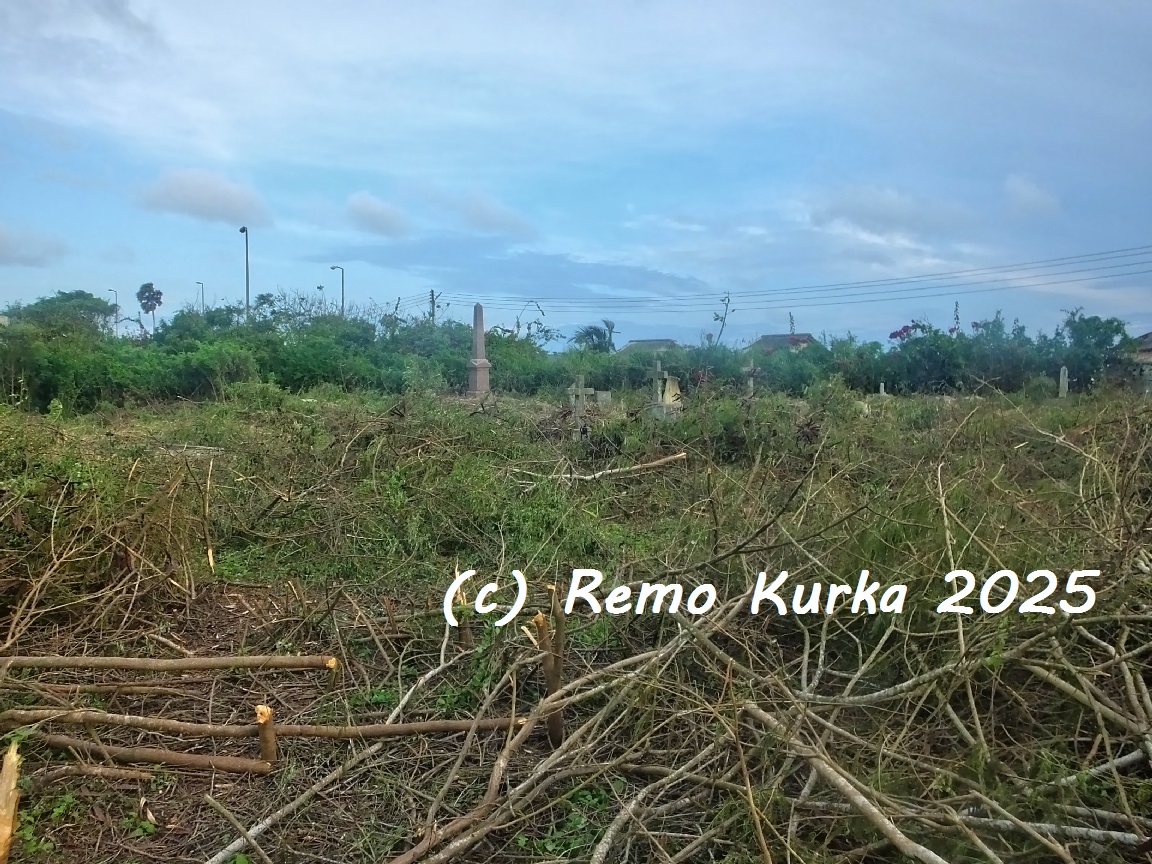
Positioned at the outer edge of Plot 3, this stone serves as a quiet punctuation mark to what researchers call “Fever Row.” It forms the closing chapter in a sequence that began with Lieutenant John Williams’ inscription of hope in April 1874, followed by Edward Huntingford’s psalm in June, and Sister Mary Josephine’s anchor of faith in July. Decades later, this 1891–1892 regimental marker stands as a full stop to that fevered era — a time when open warfare had cooled, but the Gold Coast climate still claimed its toll.
No Ashanti counter-memorial stands beside it; their remembrance lived not in stone, but through griot-told epics around Kumasi fires. In this way, the cemetery becomes a dialogue between written and oral memory — one carved in granite, the other carried by voice.
In the digital archive, this monument acts as a timeline hinge — an anchor point connecting Cape Coast to Gambia’s later campaigns: Roberts’ final stand, the reluctant service of Hausa porters, and the last flickers of imperial duty along West Africa’s coast. Planned augmented-reality overlays will soon allow viewers to trace the stone’s patina and surface etchings, revealing possible hidden marks — initials or tally lines, carved idly by the very men it commemorates.
Even the overgrowth tells its own story. The creeping vines, curling through cracks and crevices, resemble the forgotten threads of the dead. Careful clearing around the base may yet expose faint side engravings — perhaps regimental mottoes, unit numbers, or names long surrendered to the soil.
Complicated, yes — but that is the archivist’s reward: layer upon layer of history, waiting patiently for light and rediscovery.