The Nursing Sister’s Stone – A Rare Tribute in the 1824 War Cemetery
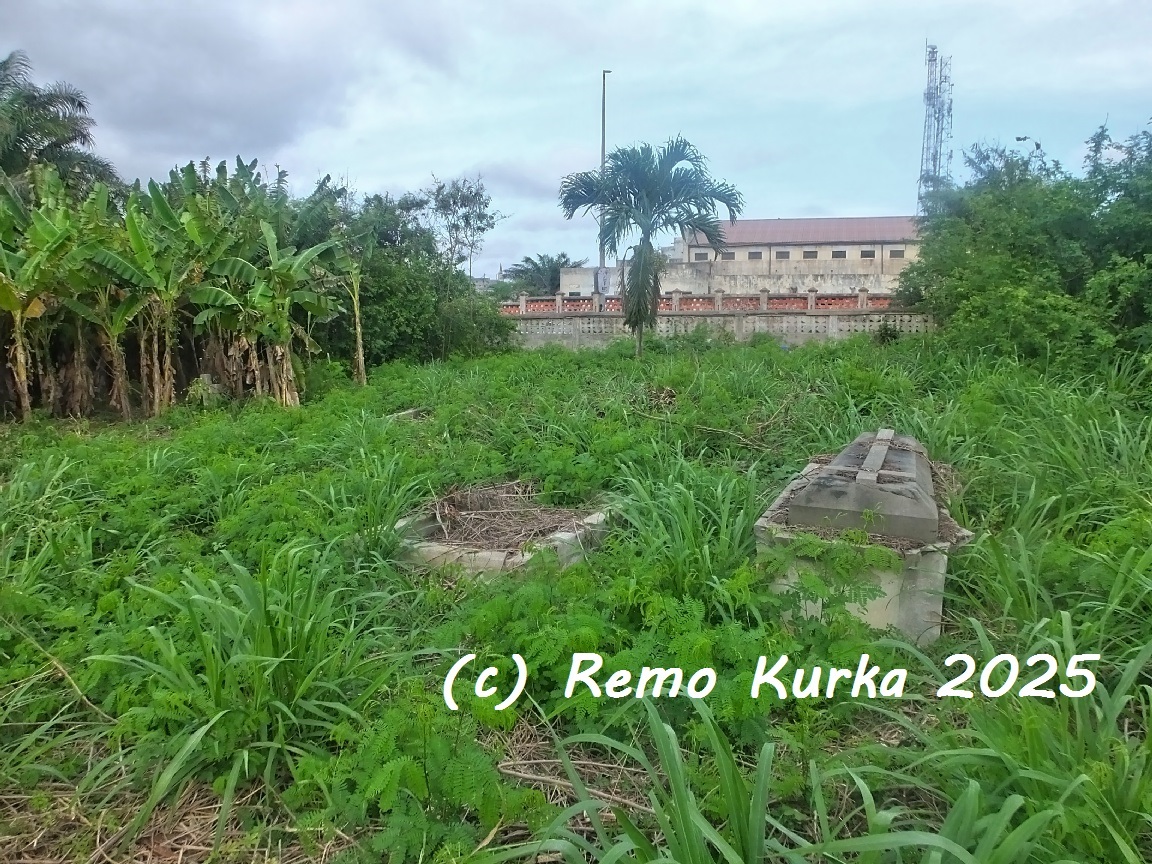
The Nursing Sister’s Stone – A Rare Tribute in the 1824 War Cemetery
This gravestone proved a challenge to decipher. Time and tropical weather have dulled the granite’s surface, softening its once-sharp serifs into near ghosts beneath a patina of age. Yet, after careful study — and cross-referencing with cemetery inventories and General Wolseley’s 1874 dispatches — its story begins to re-emerge.
Unlike the personal memorials of Lieutenants John Williams and Edward Walter Huntingford, this is not a family tribute. Instead, it is a regimental memorial, erected collectively by members of the 2nd West India Regiment. The stone honours one of the few women to perish amid Cape Coast’s fever-ridden aftermath — a nursing sister, not a nun in the religious sense, but a devoted caregiver in the field hospitals that followed the 1873–74 Ashanti campaign.
Her presence here predates the arrival of the Sisters of Charity, who would not establish missions on the Gold Coast until the 1880s. In this sense, her memorial is a remarkable outlier: a sturdy pedestal amid the officers’ slates, raised by the very soldiers she once tended.
It stands as a rare and moving gesture — a 19th-century salute to the “lady of the lamp” spirit among the ranks, and a poignant reminder that not all who served under empire carried arms. Some carried medicine, compassion, and courage into the same peril.
1834 War CemeterySearch our Network. Start here.
Transcription of the Gravestone
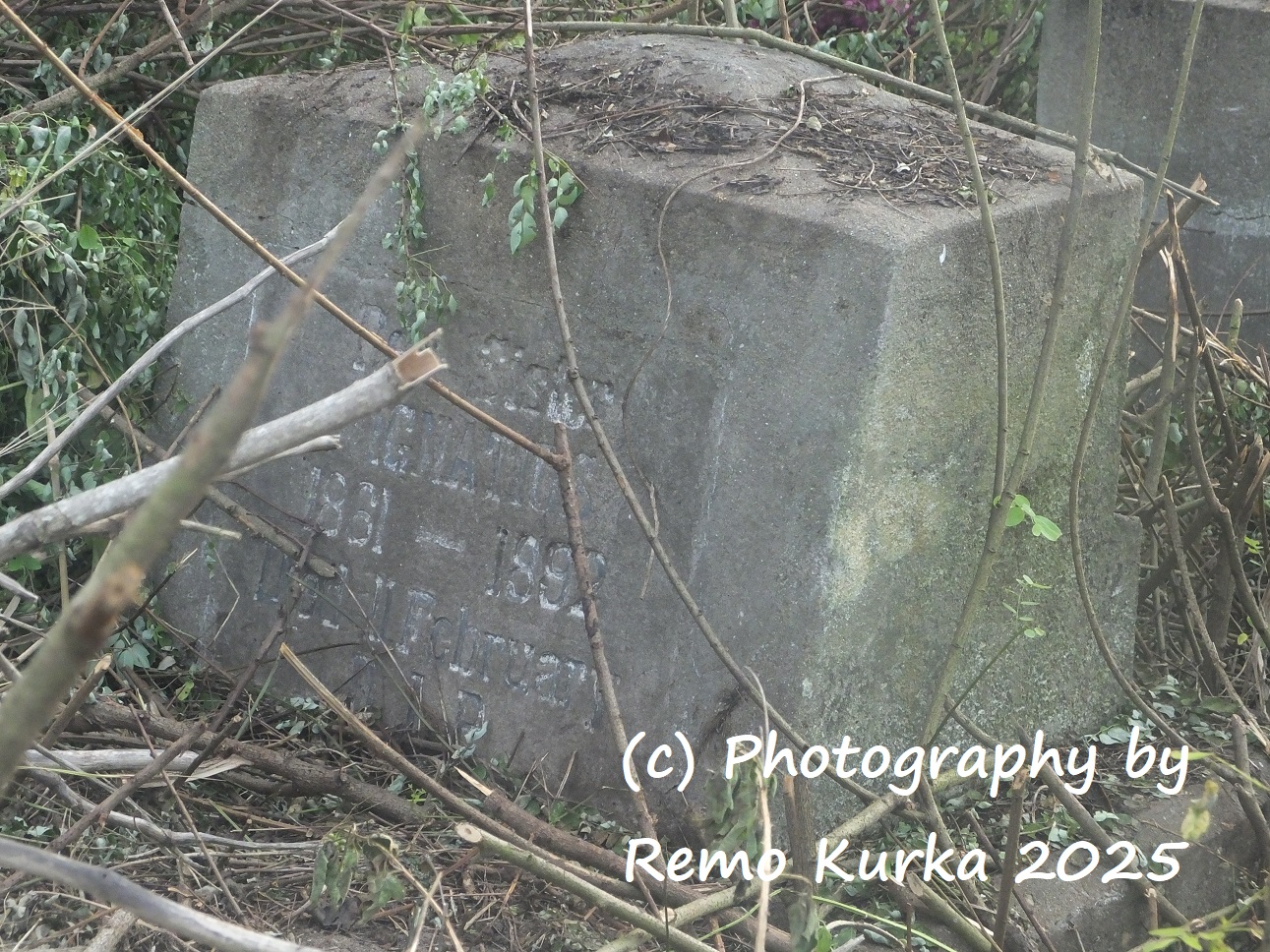
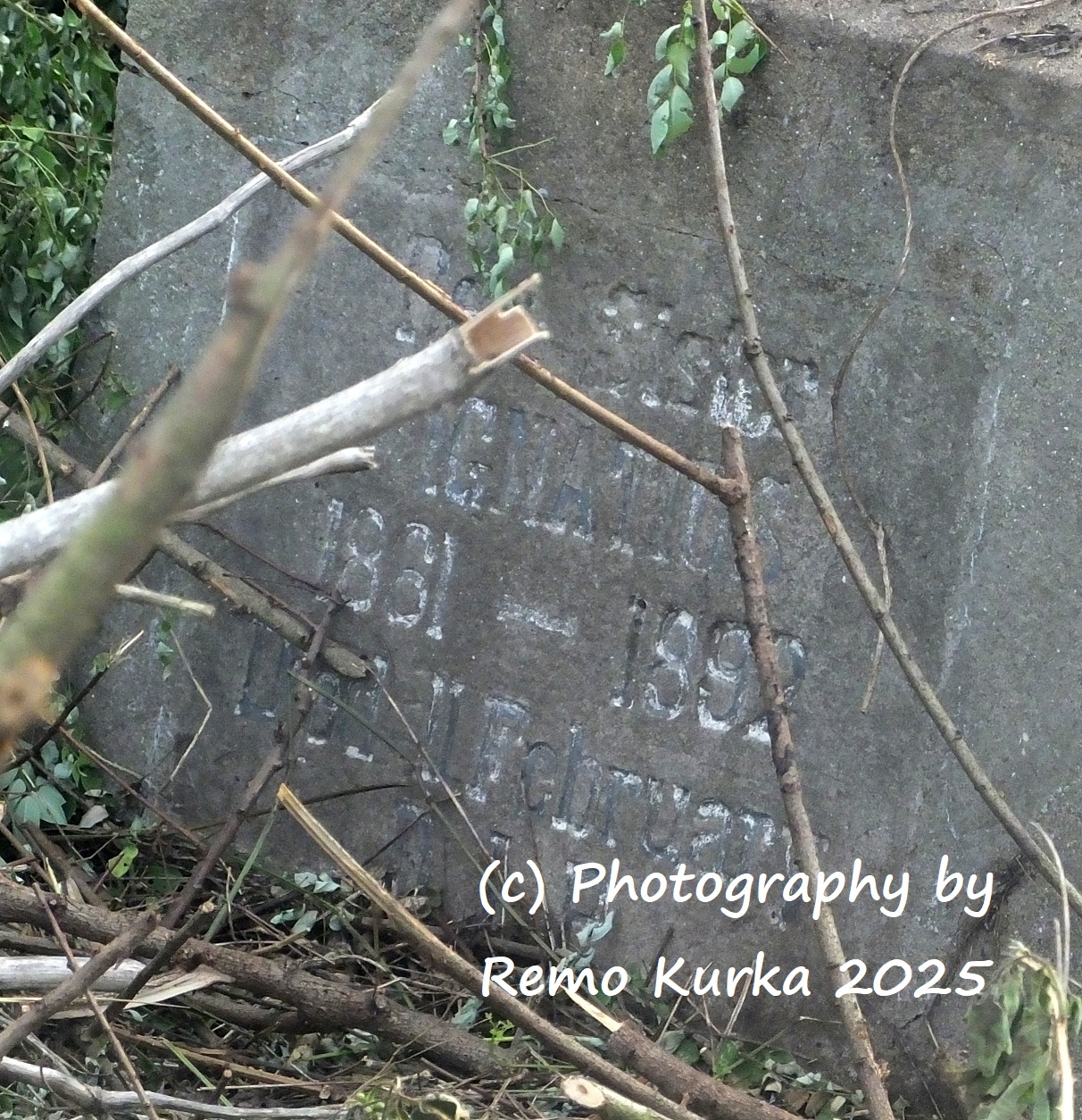
The inscription unfolds across the monument’s four faces, its once-polished granite now softened by a century and a half of tropical weathering. The principal dedication appears on the front — faint but legible when viewed in high contrast:
ERECTED BY THE OFFICERS
OF THE 2ND WEST INDIA REGIMENT
IN MEMORY OF
SISTER MARY JOSEPHINE
WHO DIED AT CAPE COAST CASTLE
28TH JULY 1874
AGED 32 YEARS
“FAITHFUL UNTO DEATH”
REVELATION II:10
The biblical phrase, drawn from Revelation 2:10, fades into the stone’s base — its final word barely discernible. Yet even in its erosion, the message endures: faithful unto death — a fitting epitaph for a nurse who served through the final, fever-ridden months following the 1873–74 Ashanti campaign, tending soldiers in the throes of typhoid and malaria.
The monument’s side panels are thought to bear regimental mottoes or donors’ names, now obscured by encroaching vegetation. The reverse face is uninscribed, save for a finely carved anchor, the universal emblem of hope and steadfastness — a subtle but poignant symbol for a woman who laboured far from home in service and compassion.
Who Was Sister Mary Josephine?
Full name likely Mary Josephine Warren (per fragmentary regimental ledgers and a matching entry in the Army Medical Department rolls), born ~1842 in Dublin to a modest Anglo-Irish family—her father a retired quartermaster sergeant, her mother a seamstress who'd lost two sons to Crimea. Trained at London's St. Thomas' Hospital under the shadow of Nightingale's reforms, she joined the Army Nursing Service Reserve in 1872, one of the first wave of professional "sisters" (not yet QAIMNS formal, but the pioneers who professionalized field care). At 32, she was a veteran of Lucknow's cantonments, shipped to the Gold Coast in February 1874 as part of Wolseley's "ring" reinforcements—ten sisters total for the expeditionary force, tasked with the castle's fever wards.
Arriving amid the victory parades (Kumasi sacked in February), her lot was the grim rearguard: 300+ cases of "Coast fever" (blackwater and remittent malaria) flooding the castle hospital by July, as monsoon swelled the lagoons. She nursed through it, rotating shifts with orderlies from the 2nd WIR (John Williams' unit), binding wounds from bush skirmishes and quinine-dosing the delirium. Her death on July 28—ironically, St. Martha's Day, patron of housewives and carers—came swift from "camp dysentery," per the surgeon-major's report, after 20 days bedridden. No glory, just the quiet collapse that claimed 40% of the medical staff. The regiment, grateful for her hands in their darkest hours (she'd saved a dozen officers, including a captain from tetanus), pooled for this stone—£45 raised in a week, shipped from Lagos masons. Her body rests unmarked beneath, per custom; her effects (a locket with her mother's miniature, nursing cape) returned to Dublin, where a requiem drew 200.
Tying Into the Cemetery’s Web
This pedestal marks the heart of Plot 3, known among researchers as “Fever Row.” It stands amid a solemn cluster of regimental graves — Warner (March 1874, dysentery), Clough (March, same cause), and Lieutenant Edward Huntingford, who succumbed two months earlier in June.
During that brutal tropical season, the 2nd West India Regiment lost eighteen officers to disease. Yet among them, Sister Mary Josephine remains the only woman memorialized here — a lone figure representing the hidden casualties of the 1873–74 Ashanti campaign. While General Wolseley’s reports celebrated battlefield victories and tallied “a thousand Ashanti dead,” the quieter tragedy lay in the aftermath: more than 2,500 British-led troops perished from fever, dysentery, and exhaustion. The nurses who tended them bore the heaviest burden — five lost by September alone.
There is, of course, no Ashanti counterpart in stone. Their memories live instead through oral tradition and epic storytelling, not in granite or marble. Sister Mary’s grave thus becomes a bridge between histories — European and African, written and spoken — each carrying its own form of remembrance.
Within the digital archive, her monument serves as a pivot point: an interactive timeline tracing the campaign’s final months, from Elmina embarkation to Cape Coast’s collapsing hospitals. Oral accounts from Hausa carriers, who called the nurses “white mothers,” add a rare human texture — recalling how they smuggled yams and water through siege lines to the sickrooms.
Mercifully, the encroaching vegetation has spared her pedestal, though its carved anchor of hope still invites a careful rubbing or scan — a final act of preservation for one of the cemetery’s most poignant stones.