Silent Stones of Empire: Rediscovering the Lost Graves of Cape Coast
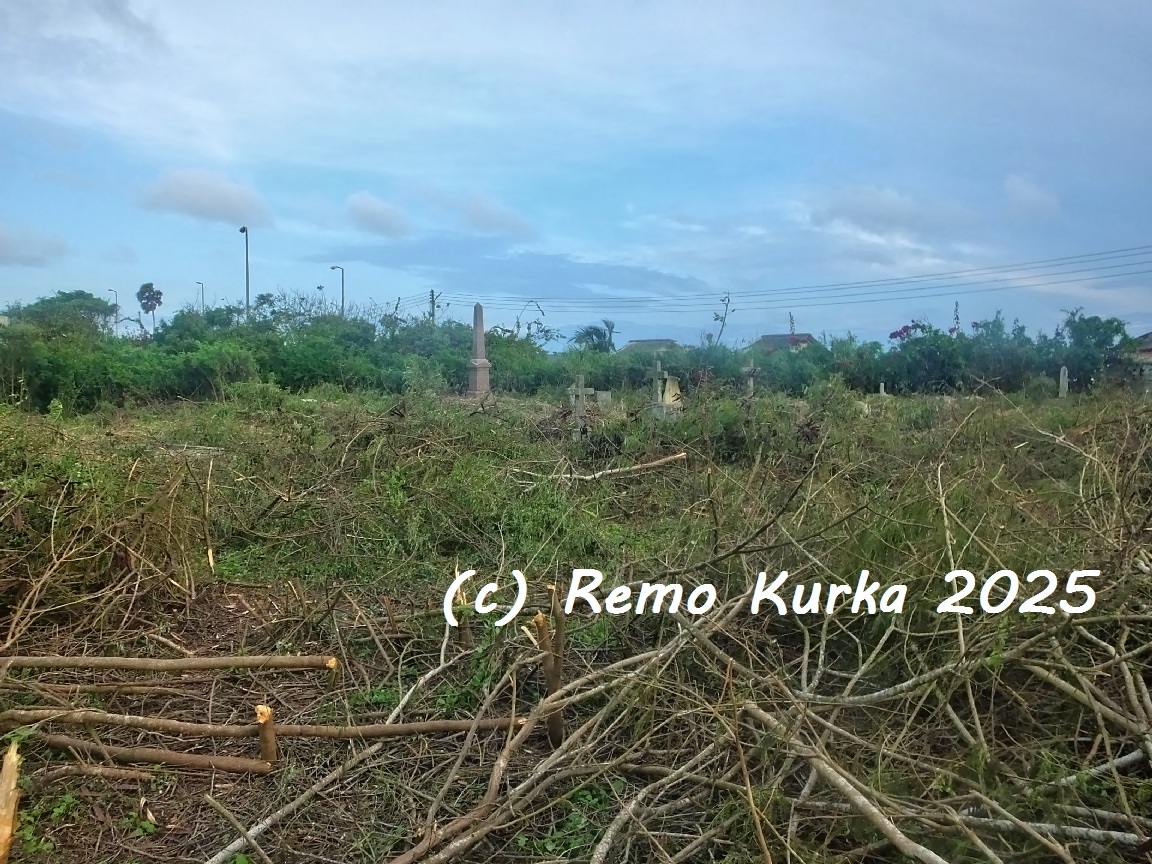
Silent Stones of Empire: Rediscovering the Lost Graves of Cape Coast
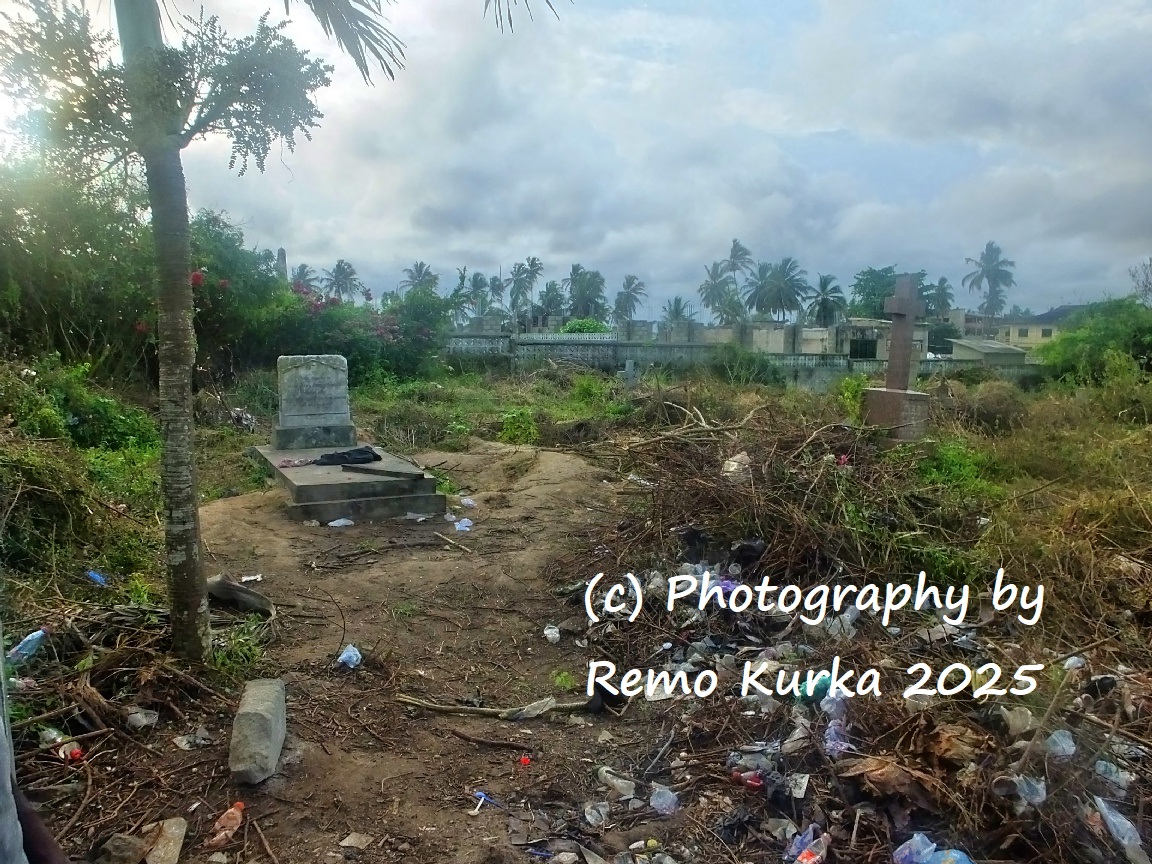
At first glance, the gravestone emerges almost by accident — half veiled in overgrowth, its granite patina dulled by salt air and time. The inscription is a puzzle of faded letters and lichen scars; even the date required a second look, where “MARCH” at first seemed etched before the faint bleed of “JUNE” appeared beneath the moss.
This pedestal marker stands close to that of Lieutenant John Williams, forming a solemn pair — two young officers of the 2nd West India Regiment, both taken by fever in the humid aftermath of the 1824 campaign. Side by side, their memorials form a diptych of imperial youth cut short — silent sentinels overlooking the coast where so many lives, ambitions, and histories converged.
1834 War Cemetery
Search our Network. Start here.
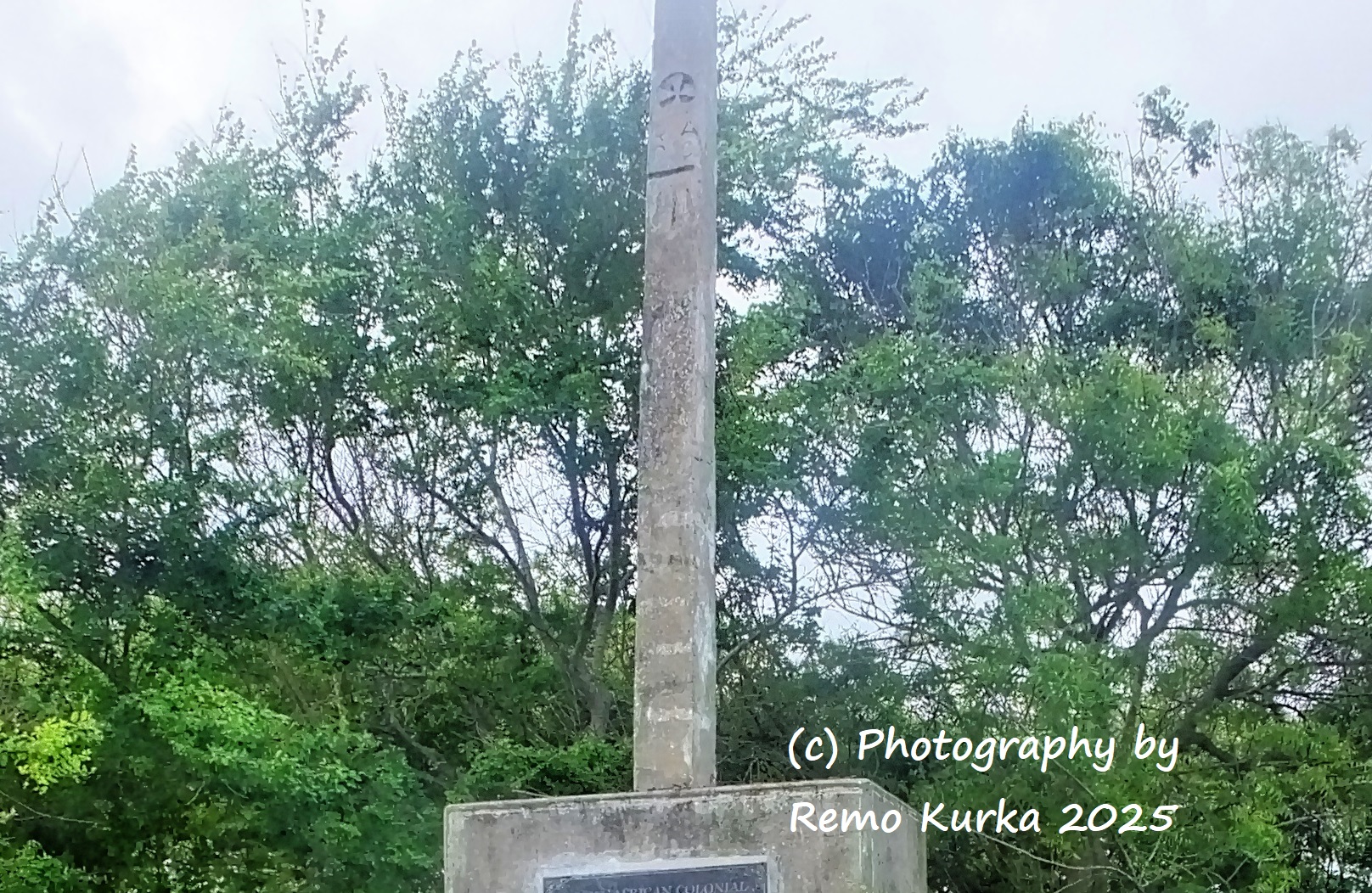
Transcription of the Gravestone
Carved in elegant serif script beneath a modest corniced headstone — unadorned, yet solemnly dignified — the inscription reads:
SACRED
TO THE MEMORY
OF
LIEUT. EDWARD WALTER HUNTINGFORD
1ST WEST INDIA REGT.
ELDEST SON OF THE REV.
EDWARD HUNTINGFORD, D.C.L.
OF WIMBLEDON
WHO DIED AT CAPE COAST CASTLE
12TH JUNE 1874
OF REMITTENT FEVER
AGED 24 YEARS
“HE THAT DWELLETH IN THE SECRET PLACE”
PSALM XCI
The epitaph concludes with a graceful truncation of Psalm 91 — “He that dwelleth in the secret place of the Most High…” — evoking divine refuge amid mortal peril. It is a quiet yet powerful reference to protection and faith, particularly poignant within the deadly realities of the tropics, where remittent fever (malaria) claimed many colonial lives.
The date, 12th June 1874, though faint from weathering, has been verified through regimental records of the 1st West India Regiment, confirming Lieutenant Huntingford’s death shortly after the close of the 1873–74 Ashanti campaign.
This stone, standing in proximity to that of Lieutenant John Williams, forms part of a small cluster of young officers memorialized within the 1824 War Cemetery — a testament to the human cost of empire’s reach and the enduring faith inscribed upon its aftermath.
Who Was Edward Walter Huntingford?
Born circa 1850 in Wimbledon, Surrey, Edward was the eldest of the Reverend Edward Huntingford (D.C.L., a scholarly cleric and fellow of the Society of Antiquaries) and his wife, Caroline. The family traced roots to Dorset gentry, with the reverend's lineage tied to 18th-century naval officers—irony, given Edward's own fatal posting. Educated at Marlborough College (a cradle for empire's sons), he commissioned as Sub-Lieutenant in the 1st West India Regiment on May 14, 1872, rising to full Lieutenant by November that year. At 24, he was green but eager, shipped to the Gold Coast in late 1873 as reinforcements for Wolseley's push.
The 1st WIR (like its 2nd Battalion counterpart with John Williams) was the backbone of British garrisons—mostly Black Caribbean recruits led by white officers like Edward, hardened for tropical service. Stationed at Cape Coast Castle post-victory, his death on June 12 came amid the mop-up: dysentery and malaria spiking as rains swelled the Pra River. Remittent fever (a vicious, relapsing malaria strain) was the culprit, per regimental dispatches—no glory in battle, just the grind of sentries under mosquito nets. His body stayed in Ghana; the family, shattered, commissioned this stone via colonial agents, echoing John's Welsh memorial in its filial devotion.
Tying into the Cemetery's Tale
Just two months after John's passing in April, Edward's marks another toll from the Third Anglo-Ashanti War's tail—over 200 Europeans lost to disease alone, per Wolseley's own tallies, dwarfing combat dead. This duo from sister regiments (1st and 2nd WIR) highlights the human churn: lads from Wimbledon and Abersychan, worlds apart yet bound by fevered graves in plot 3.
Bringing Memory Back to Light
Our ongoing work at the 1824 War Cemetery in Cape Coast has become more than preservation; it’s an act of rediscovery. From clearing the dense brush to uncover long-hidden inscriptions, to developing this digital archive as a lasting guardian of the site’s memory, each step reconnects these forgotten names with the world they helped shape.
John’s stone lies in what we’ve identified as Plot 3, part of a cluster of colonial graves linked to the early post-war years. His epitaph — that haunting biblical whisper of “Though he be dead, yet can he speak again” — will anchor an upcoming section on the personal echoes of empire, where faith, duty, and loss intersect against the wider backdrop of the Ashanti conflicts.
Each photograph, transcription, and GPS coordinate contributes to an evolving interactive map, tracing these stories through Cape Coast’s forts, the 1824 campaign routes, and the wider network of West India regimental history.
Continuing the Work
New discoveries are still emerging from the undergrowth — additional Williams family connections, possibly other West India officers, and the remains of what appears to have been a missionary burial court near the gate. Every headstone uncovered adds another layer to the human geography of Cape Coast’s colonial past.
As this digital restoration grows, collaborations are warmly welcomed — from historians, archivists, descendants, and heritage enthusiasts who share a passion for bringing these silent narratives back to light.
All text and photographs © Remo Kurka 2025.
Much of this research is based on newly documented fieldwork, not previously published online.
For collaboration, research exchange, or media inquiries:
📧 Email: ghananet-net@hotmail.co.uk
📞 Telephone / WhatsApp: +233 549 942 584