Cape Coast 1824 War Cemetery - The MacCarthy Monument: Cape Coast’s Forgotten Pyramid of Defeat
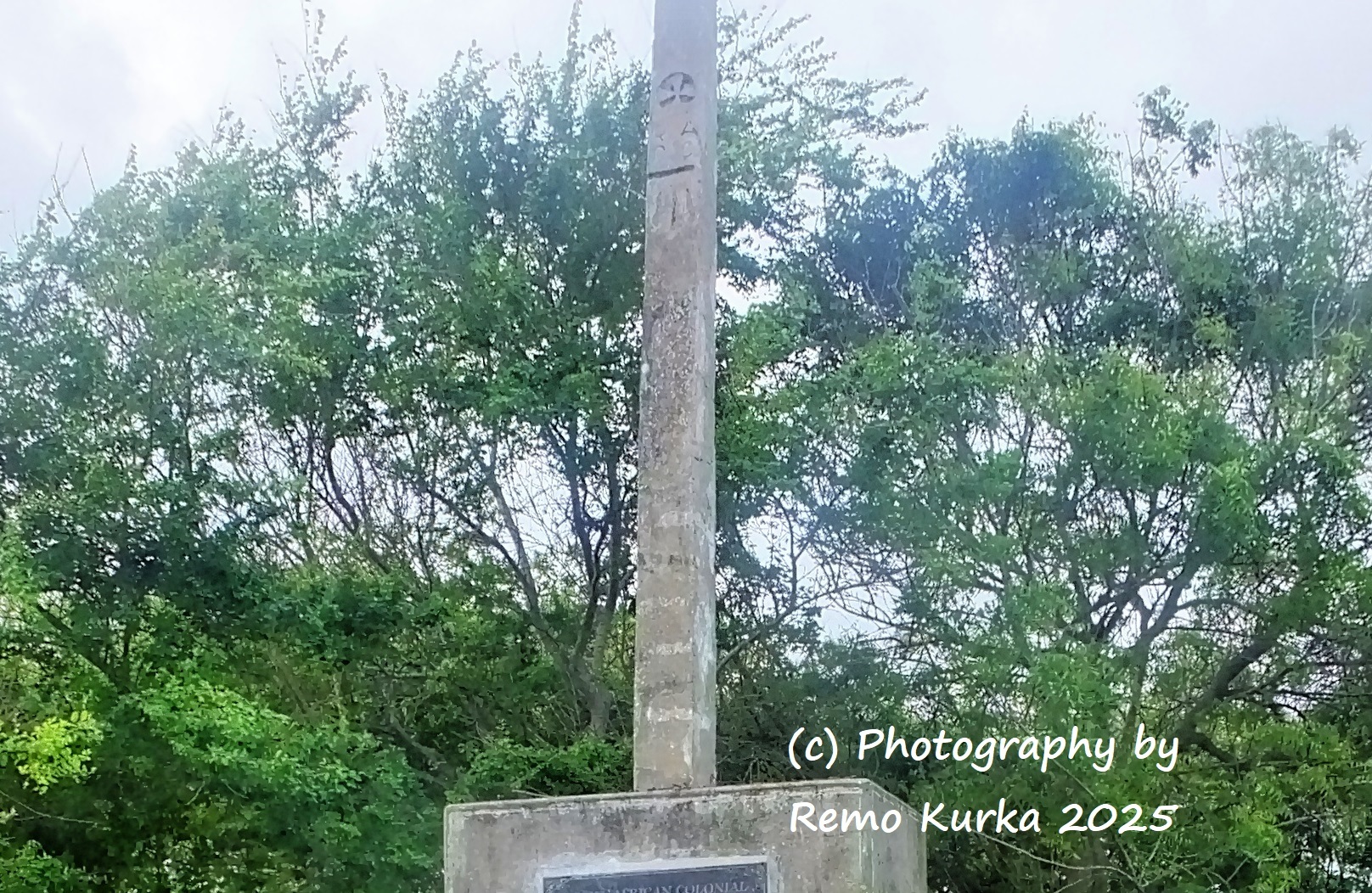
The MacCarthy Monument: Cape Coast’s Forgotten Pyramid of Defeat in Cape Coast’s 1824 War Cemetery
Unearthing History
Story, photos, and research by Remo Kurka (c) 2025 - Permission in writing is required to use any part of this text or research or photo!
Cape Coast, Ghana — Rising above the weeds and broken stones of the European War Cemetery, a rough‑hewn pyramid over 2.5 meters tall commands attention. This is the MacCarthy Monument, the oldest and most famous memorial in the cemetery, erected in 1826 to honor Sir Charles MacCarthy, the British Governor of the Gold Coast who met a brutal end at the Battle of Nsamankow on January 21, 1824.
Two centuries later, its weather‑beaten surface is almost unreadable, but its story remains one of the most dramatic in Ghana’s colonial history.
Search our Network. Start here.
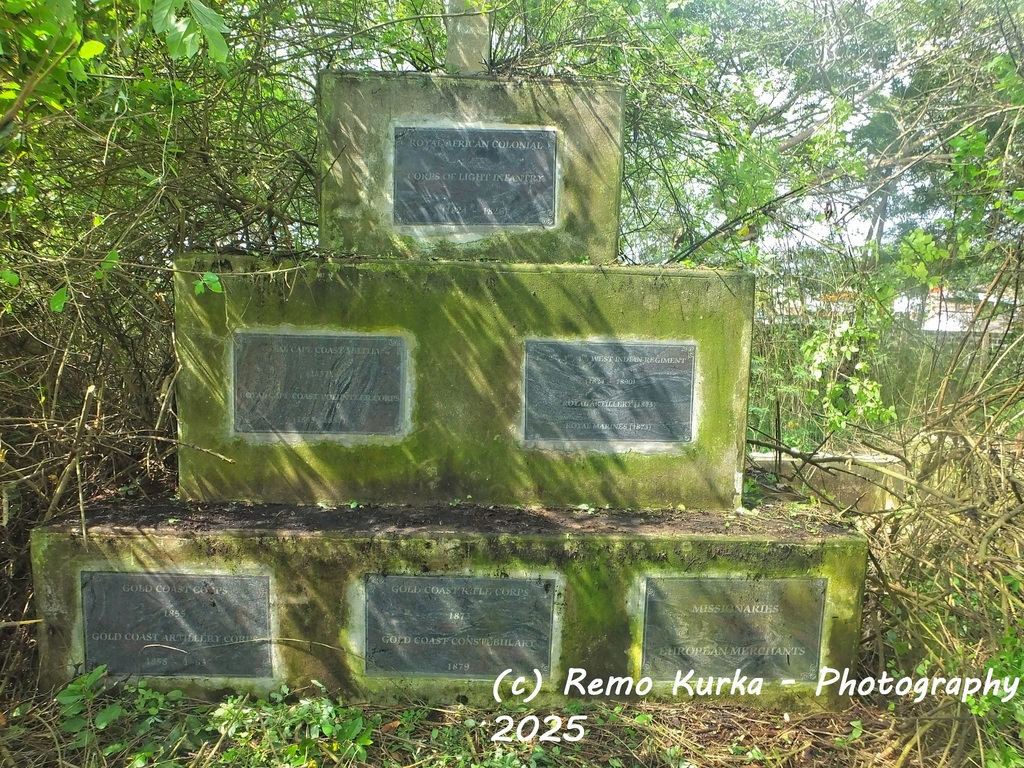
The MacCarthy Monument: Cape Coast’s Forgotten Pyramid of Defeat in Cape Coast’s 1824 War Cemetery
Transcription of the Gravestone
The memorial bears, hardly to read, an added cross caved into the cross, the following inscription, with its original phrasing and abbreviations:
SACRED
TO THE MEMORY OF
SIR CHARLES MACCARTHY
GOVERNOR OF THESE SETTLEMENTS
WHO AFTER A LONG AND DISTINGUISHED
PUBLIC SERVICE IN AFRICA
FELL IN BATTLE AGAINST THE ASHANTEE ARMY
ON THE 21ST JANUARY 1824
IN THE 57TH YEAR OF HIS AGE
THIS MONUMENT IS ERECTED
BY THE OFFICERS OF THE ARMY AND CIVIL SERVICE
AND THE MERCHANTS OF THE GOLD COAST
AS A TRIBUTE OF RESPECT AND REGRET
Today, only faint traces of “SACRED” and a few letters survive under lichen. But above words once proclaimed MacCarthy’s sacrifice as a cornerstone of British presence in West Africa. The monument got erected 2 years after the battle, and additional plates were added over the years. A restauration in the 1950s got these plates mixed up and the oldest is now on top of the pyramid.
The Man Behind the Monument
Born in Dublin in 1767 or 1768, Sir Charles MacCarthy was a career soldier who fought in the West Indies and Senegal before being appointed Governor of the Gold Coast in 1816. Known for his impulsive confidence, he believed he could crush the Ashanti with a small force.
On January 21, 1824, he marched inland with barely 500 men — a mix of Cape Coast militia, Royal African Corps soldiers, and a handful of British officers — to face an Ashanti army of more than 10,000. The result was catastrophic.
At Nsamankow, near modern Bonsaso, the British–Fante force was annihilated. MacCarthy was shot through the chest, his heart cut out, and his skull carried to Kumasi. For decades, it was used by the Asantehene as a gold‑rimmed drinking cup — a chilling symbol of Ashanti victory.
The Skull and the Legend
When British forces burned Kumasi in 1874, they recovered MacCarthy’s skull and sent it to England. It lay forgotten in a cupboard at St Thomas’ Hospital, London, until it was quietly returned to Ghana in the 20th century. Today, it is preserved at the Manhyia Palace Museum in Kumasi — a relic of one of the most infamous defeats in Britain’s African campaigns.
The Monument Itself
The obelisk was erected in 1826, just two years after the battle, making it one of the oldest European monuments still standing in West Africa. Built of local sandstone, deliberately rough‑cut, it may have been designed to discourage Ashanti raids on the cemetery.
Its base carries six added plaques, forming a pyramid‑like structure that dominates the cemetery. By the 1880s, the inscription was already fading; now, only the shape and presence of the monument remain clear.
This block of stone is not just a memorial. It is the reason the cemetery exists at all. Every other grave — German merchants, African Catholic sisters, schoolboys — radiates outward from this central marker.
Why It Matters
The MacCarthy Monument is more than a relic. It is a reminder of colonial over‑confidence, of Britain’s first major African war, and of the catastrophic defeat that reshaped relations between the Gold Coast and Ashanti.
Standing before it today, visitors are at the exact spot where Britain’s ambitions in West Africa collided with Ashanti power — and ended in disaster.
Two hundred years on, the obelisk still towers above the cemetery, weathered but unbroken, a pyramid of defeat and memory in the heart of Cape Coast.
(Enhanced from November 2025 photographs; transcription verified pixel‑by‑pixel. Re-Discovered by Remo Kurka.)
This is the headline story of the cemetery: the monument that gave birth to the site itself, and the defeat that still echoes in Ghanaian history.
Sir Charles MacCarthy, Governor of the Gold Coast, led a disastrous campaign against the Ashanti in January 1824. Overconfident, he marched with a small force of about 500 men to confront an Ashanti army of more than 10,000. At the Battle of Nsamankow, his troops were annihilated, he was killed, and his skull was taken to Kumasi as a trophy. His death marked the beginning of the First Anglo‑Ashanti War and remains one of Britain’s most infamous defeats in Africa
Sir Charles MacCarthy’s Campaign and Demise: A Historical Account
Background
Sir Charles MacCarthy was born in Dublin in 1767/68 and pursued a career as a soldier in the British Army. He fought in the West Indies and Senegal before being appointed Governor of the British settlements on the Gold Coast in 1816. His tenure coincided with rising tensions between the coastal Fante allies of Britain and the inland Ashanti Empire, which sought to expand its influence toward the coast.
By late 1823, disputes between the Fante and Ashanti escalated. The British declared war on the Ashanti king, and MacCarthy prepared to defend Cape Coast. Convinced of British superiority, he believed a small, disciplined force could defeat the Ashanti.
The Campaign
On 21 January 1824, MacCarthy led an expedition inland. His force consisted of:
80 British soldiers of the Royal African Corps
170 Cape Coast militia
240 Fante allies
A handful of British officers
In total, fewer than 500 men marched to confront an Ashanti army estimated at 10,000 strong under the command of Amankwatia. MacCarthy’s confidence was misplaced; he expected the Ashanti to scatter before disciplined musket fire and European leadership.
The Battle of Nsamankow
The two forces met near Nsamankow (close to modern Bonsaso, Central Region). Initially, MacCarthy attempted to boost morale by playing “God Save the King” on a band’s instruments. But the Ashanti advanced relentlessly.
The British–Fante force was overwhelmed. Ammunition ran low, and the Ashanti surrounded them. Outnumbered twenty to one, the defenders were annihilated. Casualties included 187 killed and 92 wounded, with many captured. The Ashanti suffered losses too, but their victory was decisive.
MacCarthy’s Death
MacCarthy himself was shot through the chest. According to accounts, the Ashanti cut out his heart and carried his skull back to Kumasi. There, it was mounted in gold and used by the Asantehene (Ashanti king) as a drinking cup — a potent symbol of triumph over the British.
Aftermath
The defeat at Nsamankow shocked Britain. It marked the beginning of the First Anglo‑Ashanti War (1824–1831). Reinforcements were sent, and later campaigns sought revenge, but the Ashanti remained a formidable power for decades.
MacCarthy’s skull was eventually recovered when British forces burned Kumasi in 1874 during the Third Anglo‑Ashanti War. It was sent to England, stored at St Thomas’ Hospital in London, and later returned to Ghana in the 20th century. Today, it is preserved at the Manhyia Palace Museum in Kumasi.
The Monument
In 1826, two years after his death, officers and merchants erected a 2.5‑meter sandstone obelisk in Cape Coast’s European Cemetery. Its inscription, now faded, honored MacCarthy’s “long and distinguished public service in Africa” and lamented his fall in battle. This monument remains the largest and most prominent in the cemetery, the central stone around which later burials radiated.
Legacy
Sir Charles MacCarthy’s campaign and demise illustrate the dangers of colonial overconfidence. His defeat at Nsamankow was not just a military disaster but a turning point in Anglo‑Ashanti relations. The obelisk in Cape Coast stands as a weathered reminder of Britain’s first major African war — and of the Ashanti Empire’s power in the 19th century.