Cape Coast 1824 War Cemetery European Cemetery – The Rediscovered Grave of John (1855 – 25 July 1893)
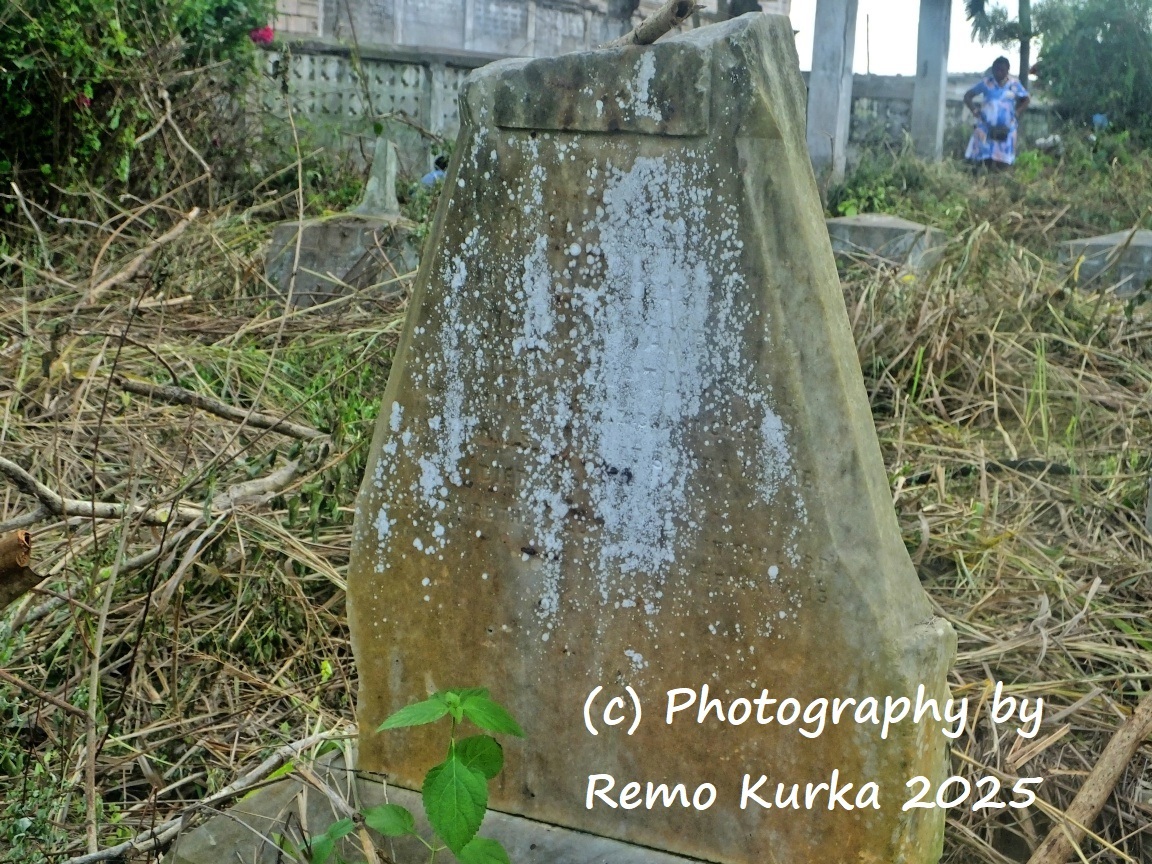
Unearthing History: The Rediscovered Grave of John in Cape Coast’s 1824 War Cemetery
Story, photos, and research by Remo Kurka (c) 2025 - Permission in writing is required to use any part of this text or research or photo!
Cape Coast 1824 War Cemetery – The Rediscovered Grave of John (1855 – 25 July 1893)
For decades, a rough granite boulder in Cape Coast’s European Cemetery lay half‑hidden under lichen and vines. Its inscription blurred into silence, mistaken for a nun’s grave or ignored altogether. Visitors walked past, unable to read the name.
But stones are patient. They wait for someone stubborn enough to listen. And in November 2025, after high‑resolution photographs, digital lifting, and hours of persistence, the truth emerged clearly:
1834 War CemeterySearch our Network. Start here.
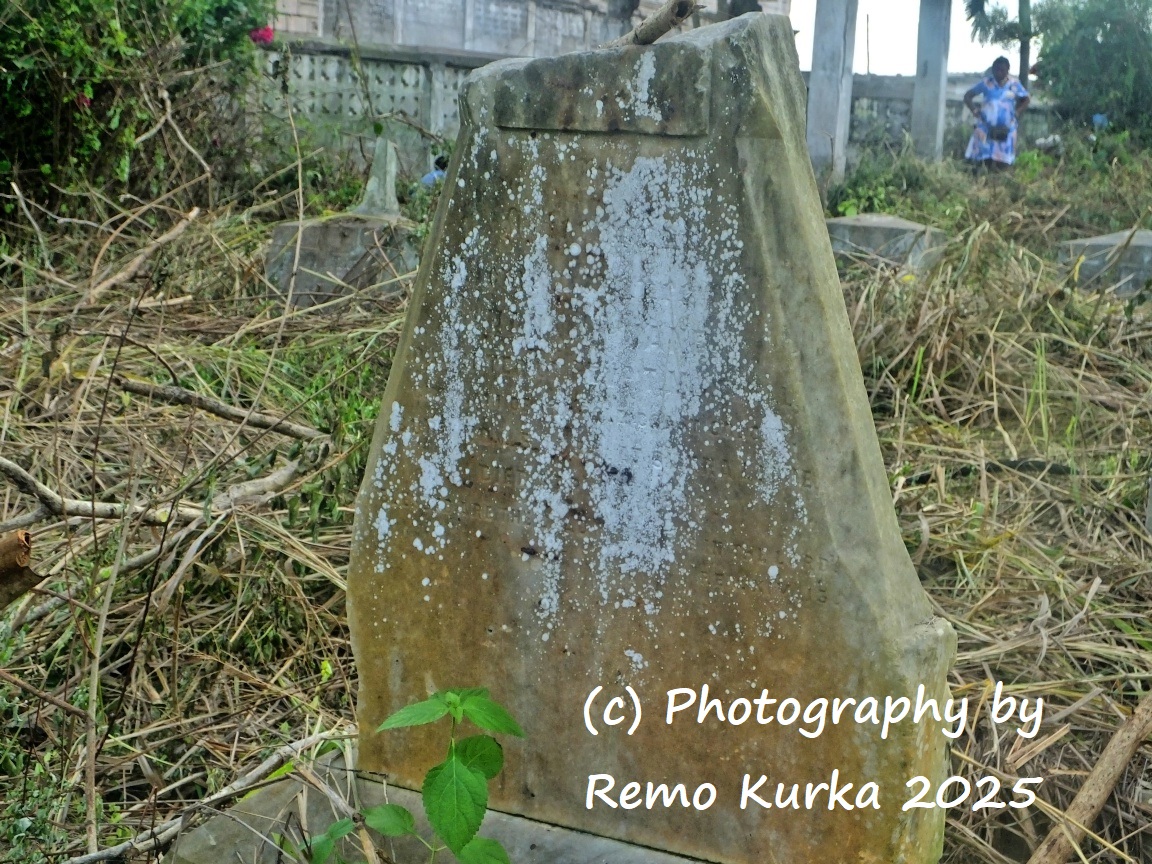
Cape Coast European Cemetery – The Rediscovered Grave of John (1855 – 25 July 1893)
Transcription of the Gravestone
The memorial bears the following inscription, with its original phrasing and abbreviations:
In Memory Of John
John
DIED 25TH JULY 1893
AGED 38 YEARS
R.I.P.
Who He Was
The stone tells us little beyond his name and age. But the context of Cape Coast in 1893 fills in the outlines. John was almost certainly a European lay missionary, catechist, or colonial civil servant — one of the many men who came to the Gold Coast in the prime of life, hoping to serve, teach, or administer, only to be struck down by fever.
At 38 years old, he was no longer a youth, but a man at the height of his strength and experience. His death in July 1893 places him in one of the worst fever seasons on record, when malaria and yellow fever swept through Cape Coast with devastating force.
The Fever Season of 1893
The 1890s were notorious for epidemics along the coast. Missionaries, merchants, and civil servants alike fell victim to the fevers. The cemetery holds several graves from this period, their stones clustered together like silent witnesses to a single terrible season.
John’s death on 25 July 1893 places him squarely in that wave. Within weeks, multiple burials were recorded, each stone repeating the same formula: “In Memory Of… Died… Aged… R.I.P.” The repetition is haunting, a litany of loss.
The Stone
His marker is a rough local granite boulder with a carved panel, identical in style to other civilian graves of the 1890s. Unlike the polished obelisks of British officers or the imported marble of merchants, these stones were carved on site, simple and functional.
That simplicity makes them harder to read after decades of weathering. But once the lichen was lifted, the letters stood out boldly: the tall “J,” the round “O,” the sharp “H” and “N.” His name, hidden for 131 years, spoke again.
Why This Grave Matters
John’s grave reminds us that the cemetery is not only a resting place for soldiers and sisters, but also for the ordinary men who carried the weight of colonial administration and missionary work. They were clerks, teachers, catechists, civil servants — men who lived quietly, served faithfully, and died suddenly.
His rediscovery is a triumph of memory. For more than a century, his name was blurred into silence. Now, thanks to persistence and care, he is remembered again.
Legacy
John — whoever you were — welcome back to the light after 131 years. Your name is spoken again, your stone restored to meaning.
Rest in peace. ✝️🕊️
(Rediscovered and correctly read by Remo Kurka, November 2025.)
Sources
Archives of the Sisters of Our Lady of the Apostles (O.L.A.), France and Ghana
Catholic mission histories in Ghana (Elmina, Cape Coast, Saltpond)
Missionary diaries of the 1880s–1890s (Society of African Missions, SMA)
Oral traditions of early Catholic sisters in Cape Coast