Cape Coast 1824 War Cemetery European Cemetery – Lieutenant J. F. Meade Prince of Wales Regiment of Foot grave stone 1842 from the quiet killing years
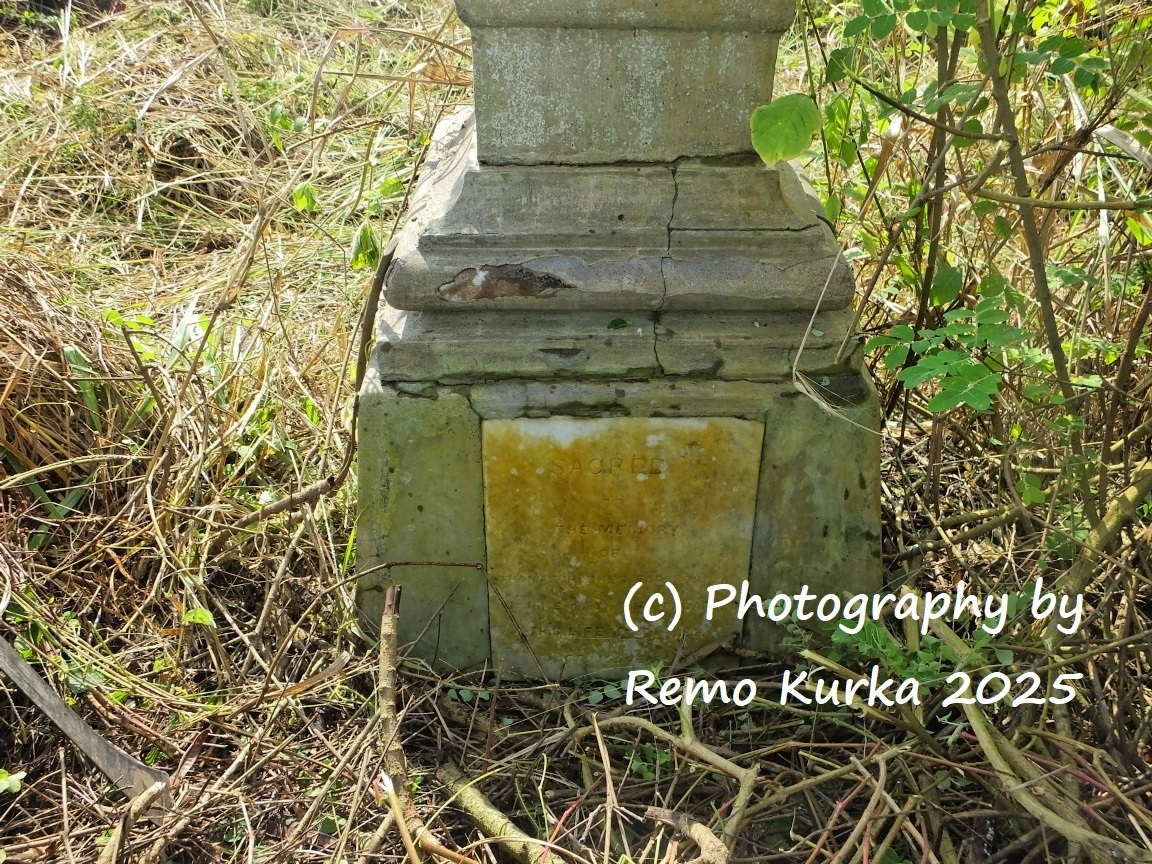
Unearthing History: – Lieutenant J. F. Meade’s stone from the quiet killing years in Cape Coast’s 1824 War Cemetery
Story, photos, and research by Remo Kurka (c) 2025 - Permission in writing is required to use any part of this text or research or photo!
Cape Coast 1824 War Cemetery – Lieutenant J. F. Meade’s 1842 stone from the quiet killing years
Some stones shout. Others, like Lieutenant J. F. Meade’s, speak in a calm, classical voice — a white marble panel set into a weathered pedestal, steady amidst the bush. The words are simple, the loss immense. He was twenty‑eight, and the coast took him quickly.
1834 War CemeterySearch our Network. Start here.
SACRED TO THE MEMORY OF LIEUT. J. F. MEADE H. M. 98TH REGIMENT WHO DIED AT CAPE COAST CASTLE ON THE 17TH JULY 1842 AGED 28 YEARS
Transcription of the Gravestone
The memorial bears the following inscription, with its original phrasing and abbreviations:
SACRED
TO THE MEMORY OF
LIEUT. J. F. MEADE
H. M. 98TH REGIMENT
WHO DIED AT CAPE COAST CASTLE
ON THE 17TH JULY 1842
AGED 28 YEARS
Who he was
Lieutenant John Frederick Meade served in His Majesty’s 98th (Prince of Wales’s) Regiment of Foot. The name Meade is strongly Irish in origin, and many officers of the era came from Anglo‑Irish families; his age and rank fit the profile of a young subaltern posted to garrison duties at Cape Coast Castle in 1842 — a year when fever seasons ran hard along the Gulf of Guinea. His death at twenty‑eight sits within the wider pattern: men in their prime succumbing within weeks to “malignant fever,” the era’s catch‑all for malaria or yellow fever.
The 98th regiment in the 1840s
Raised in 1824, the 98th served long stints overseas, including twelve years in South Africa and policing duties in northern England before embarking for operations associated with the First Opium War in 1842. Its officers and men were part of a British Army that routinely moved units and detachments across the empire, with garrison responsibilities shifting as needs changed. Meade’s stone anchors one officer of the 98th to Cape Coast in mid‑1842, marking how the network of imperial postings reached even this fever‑haunted fort.
Fever at the “White Man’s Grave”
What killed Lieutenant Meade almost certainly wasn’t a bullet but disease. Across the empire, and particularly in West Africa and the Caribbean, “fever” devastated newly arrived troops. Contemporary and modern medical histories are stark: outbreaks repeatedly felled more soldiers than battle, with mortality spikes among the “unseasoned” who had not yet survived a first exposure to local pathogens. Malaria, yellow fever, and dysentery were the true enemies; regiments could lose swathes of men in a single season, and invaliding home was common for survivors weakened beyond service.
The monument
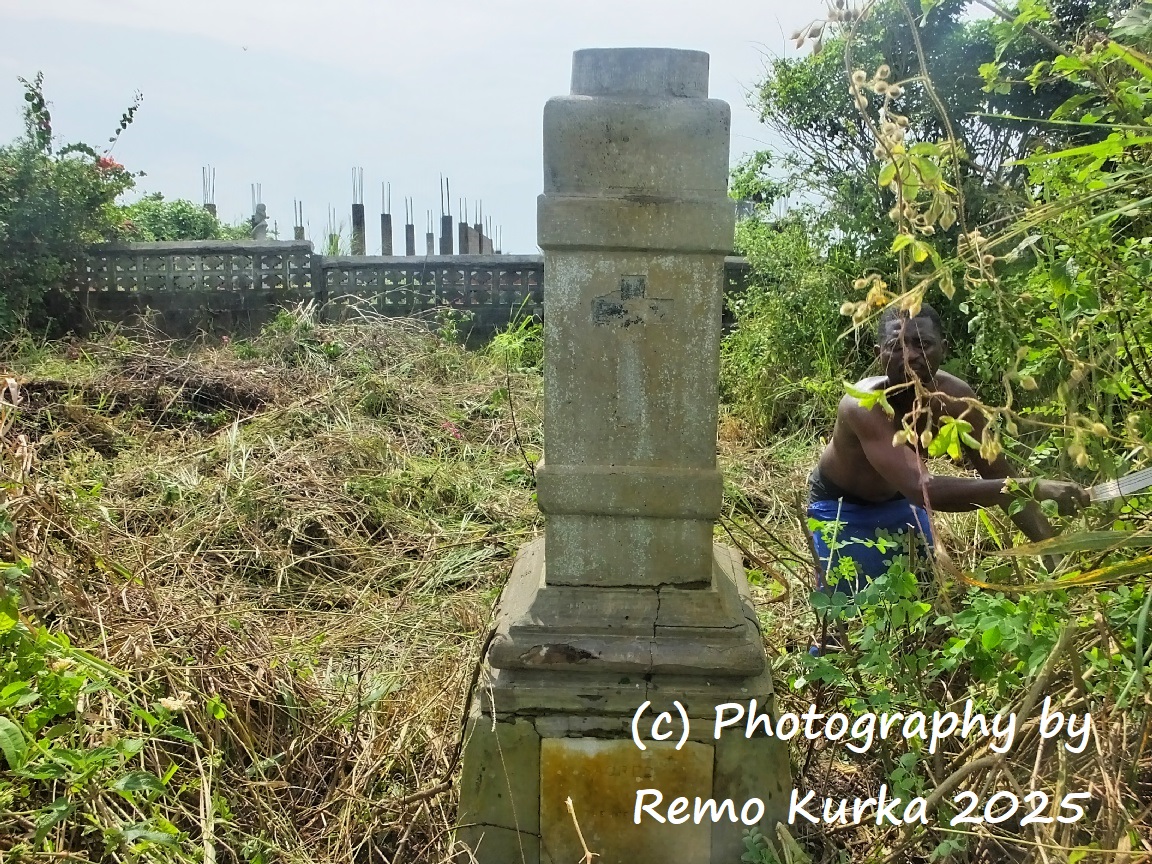
His memorial is a handsome, classically proportioned pedestal, still topped by a cross now l(however crumbling). The marble inscription panel — imported, its lettering sharp despite tropical weathering — sits on a base stained by 180 years of sun, rain, and iron oxides leaching through the substrate. It is one of the few surviving officer’s stones from the 1840s in this cemetery, a relic of a quieter but deadlier inter‑war era when Cape Coast was officially “at peace” yet the burial ground kept filling.
Why this grave matters
Meade’s stone speaks softly of a hard truth: between the big wars, the coast was still a place of relentless loss. His name restores one life to a wider history of garrison duty, medical fragility, and the human cost of empire. The pedestal endures, the panel remains legible, and a twenty‑eight‑year‑old officer is remembered — not for a battle honour, but for a brief life ended by the climate’s invisible war.
R.I.P. and welcome back, to visibility!
Sources
Archives of the Sisters of Our Lady of the Apostles (O.L.A.), France and Ghana
Catholic mission histories in Ghana (Elmina, Cape Coast, Saltpond)
Missionary diaries of the 1880s–1890s (Society of African Missions, SMA)
Oral traditions of early Catholic sisters in Cape Coast