The 1824 War Cemetery, Cape Coast - Rediscovering a Forgotten Chapter of Ghana’s Early Colonial History
Hidden quietly behind the historic streets of Cape Coast lies one of Ghana’s least-known but most historically significant sites — the 1824 War Cemetery. This colonial-era burial ground, dating back to the aftermath of the Anglo–Ashanti conflict of 1824, stands as a silent witness to the earliest years of British rule on the Gold Coast.
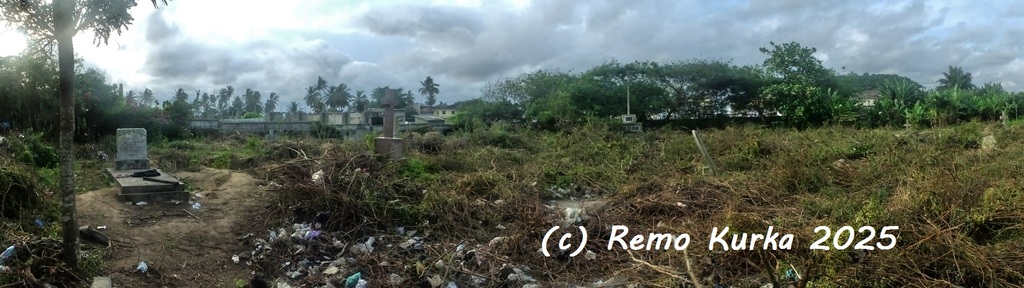
All photographs, research notes, and written content on this website are strictly copyright © Remo Kurka 2025.
🇬🇭 Ghana3d.com Gateway Experience 360
Find your roots and rise — Ghana3d.com Gateway Experience 360 is your ultimate guide to cultural, historic, and soul-stirring adventures. Whether you're returning to your ancestral land or exploring Ghana for the first time, we offer curated journeys that connect you deeply to the spirit of West Africa. From powerful walks through Cape Coast & Elmina slave castles to the vibrant rhythms of Accra’s nightlife. From sacred village ceremonies to awe-inspiring natural beauty — your journey starts here.
- ✔ Instant Confirmation
- ✔ Free Cancellation
-
✔ Best Price Guarantee
You'll receive a full refund if you cancel at least 24 hours in advance of most experiences.
Unlike other well-documented heritage landmarks, this cemetery has remained almost entirely overlooked in modern records. It is the final resting place of British colonial soldiers, European merchants, German settlers, and Irish nuns who lived and worked in Cape Coast during the early 19th century. Their graves mark the human side of the city’s colonial story — one of ambition, hardship, faith, and loss.
A Hidden Heritage Site
For nearly two centuries, the 1824 War Cemetery has survived in quiet obscurity. Overgrown grass, crumbling tombstones, and encroaching urban life have all but erased its presence from public view. Yet beneath the worn stones lies a wealth of history that connects Cape Coast to global events of the 1800s — from the expansion of empire to the spread of Christianity and early European trade on the West African coast.
Much of what is known about this cemetery today comes from new fieldwork and original research conducted in 2025, as very little verified information is available online or in archives. Each headstone, cross, and fragment of inscription has been or will be carefully documented, to preserve the names and stories that would otherwise be lost to time.
Why It Matters
The 1824 War Cemetery is not simply a colonial relic — it is a historical document in stone. Its preservation offers:
Historical insight: A glimpse into early British military and missionary presence on the Gold Coast.
Cultural context: A deeper understanding of Cape Coast’s layered identity beyond the slave trade narrative.
Educational value: A unique opportunity for historians, students, and heritage researchers to study a site untouched by mainstream tourism.
By restoring and protecting this cemetery, Ghana can strengthen its heritage tourism while acknowledging every chapter of its past — not just the celebrated or comfortable ones.
Research, Collaboration & Copyright Notice
All photographs, research notes, and written content on this website are strictly copyright © Remo Kurka 2025.
The work presented here is the result of independent field documentation and newly verified research. Since much of this information has never been published online, any reproduction, download, or reuse of photos or text requires prior written permission.
Photo and media requests can be made directly via WhatsApp or through the contact form provided on this website.
Researchers, local historians, and institutions interested in exchanging verified information, archival materials, or related findings are warmly invited to collaborate. Contributions and knowledge sharing are vital to ensuring that this forgotten site receives the recognition and care it deserves.
Visit and Learn More
The 1824 War Cemetery is located within walking distance of Cape Coast Castle, Ghana’s most forgotten historical landmark. Plans are ongoing to restore, document, and interpret the site for educational and cultural tourism purposes.
For inquiries, collaboration, or research partnerships:
📞 Telephone / WhatsApp: +233 549 942 584
📧 Email: ghananet-net@hotmail.co.uk